
Outstanding maternity care is possible, even in challenging contexts. Our latest webinar highlights two inspiring examples and shows how data helps balance emotion with objective decision-making.
The Strasys webinar, “Maternity Services in Crisis: Designing Better Beginnings,” opened with a question from Chair Naeem Younis, Founder and CEO of Strasys. “Think about the last birth story you heard from a friend, colleague, patient, or family member. Was it a story of safety and joy, or one of fear and uncertainty? This webinar series is about helping leaders make better decisions and maternity is one area where decisions are felt personally.”
Maternity services across England are under real pressure. No unit inspected by the CQC was rated outstanding for safety. Black women are more than twice as likely to die in pregnancy or the postnatal period as white women. Asian women face elevated risk and women in the most deprived areas are almost twice as likely to die as those in the least deprived. Put simply, a woman’s safety and a baby’s chances still depend too much on her circumstances, her ethnicity and her postcode.
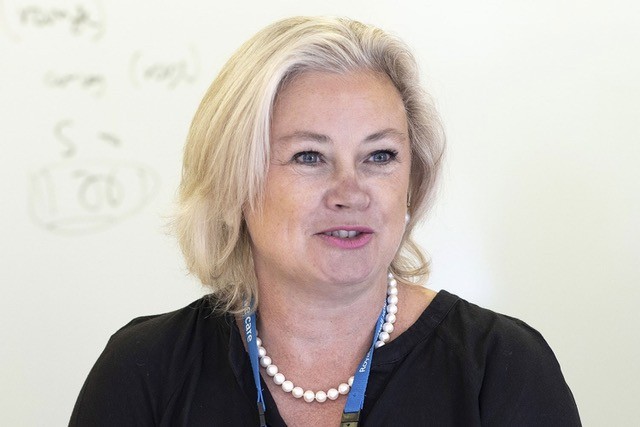
Kate Shields
Former CEO, Royal Cornwall Hospitals Trust
A journey to being brilliant
Our first speaker Kate Shields, a former Chief Executive of Royal Cornwall Hospitals Trust and Cornwall and Isles of Scilly ICB, explained that after a 2017 CQC inspection, their trust was in crisis. Extensive work was carried out to understand what was driving the deficits and how staff could work together more effectively, yet further problems led to a second Section 29A warning notice.
The leadership team took a step back, engaging staff, especially midwives, to define what great care meant, leading to a shared ambition to become ‘brilliant.’ They identified a leadership barrier where nothing could get out and very little got in. Therefore they removed the senior team and quickly saw issues surface via Freedom to Speak Up. NHS Improvement helped reshape outcome reporting, develop in-house specialists and address cultural challenges. Policies were evidence-based but driven from within the service.
A pivotal moment came when two women confronted the team about poor experiences, prompting the creation of the Maternity Voices Partnership (MVP), involved throughout eight years of transformation. The ImproveWell app engaged staff, with more staff registered than at much larger trusts, over half being midwives shaping service improvements.
Be decisive and set clear expectations
The team learned to set clear expectations, define what good looked like and engage widely – from senior leaders to ward staff – focusing on issues, not individuals. Pausing to rethink approaches, prioritising culture and listening to staff were key. Board oversight helped close gaps between service and board governance. Initiatives like Whose Shoes sparked conversations about teamwork and culture.
By 2019, maternity services were rated ‘Good’ by the CQC, maintained in 2023 despite national pressures. Sustained improvement was the result of long-term, evidence-based engagement, not a single action.
Kind and compassionate leadership doesn’t have to be soft
When asked how we enable people to be psychologically able to deal with change while still carrying on with their day jobs, Kate was clear about the importance of avoiding blame and recognising that psychological safety is sometimes treated as lip service. “It’s something that prevents us from addressing the problem in front of us, whereas when it is paired with kind and compassionate leadership, it allows people to voice their difficulties. I think it’s essential if we’re going to address really tricky systemic issues that are not the responsibility of any one person or profession.”
When asked what the three things the board should focus on, she added “Are we providing a fantastic service? Are people telling us their experience is fantastic? And does anyone want to work with us?”
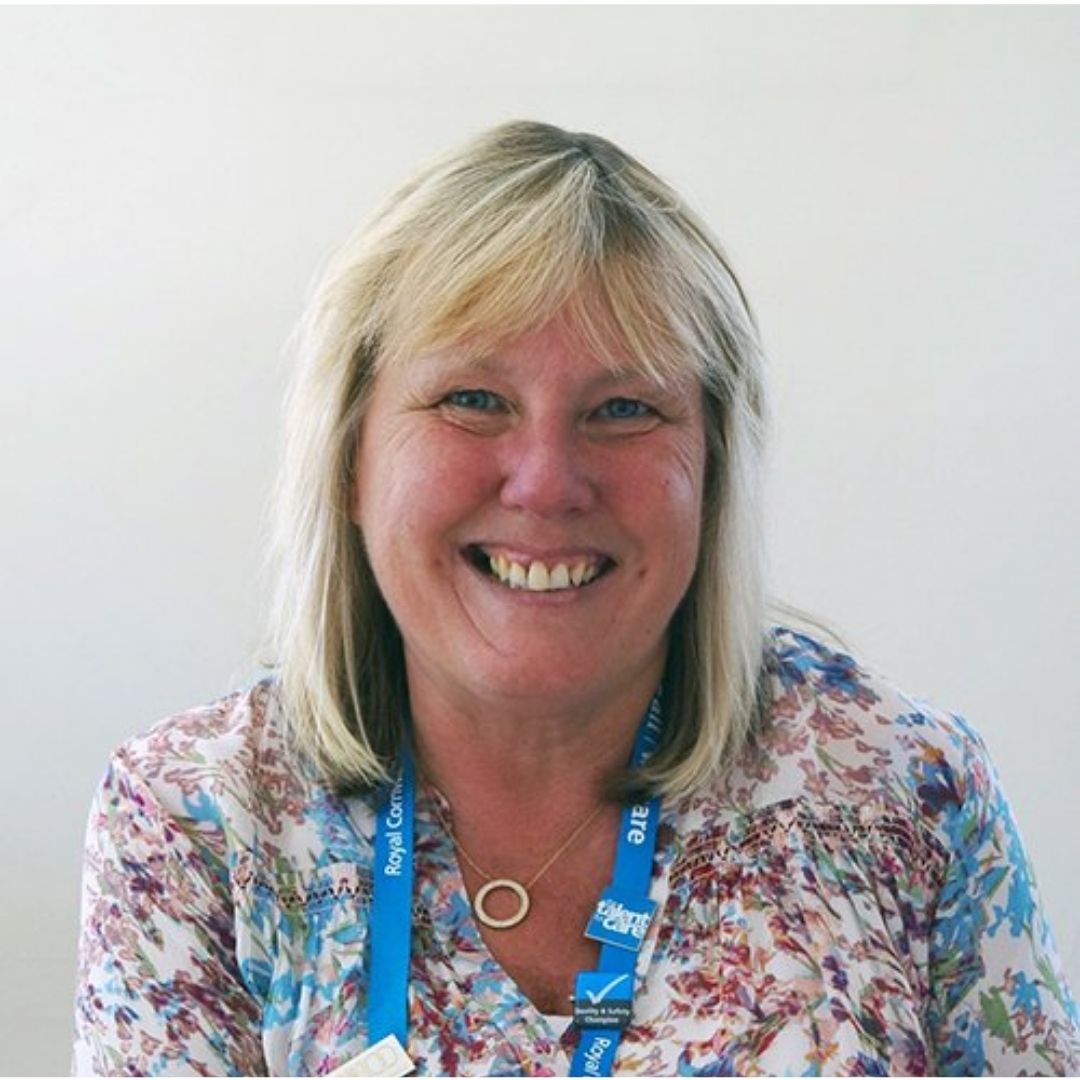
Kim O’Keeffe
CNO and Dep CEO, Royal Cornwall Hospitals Trust
Building trust goes beyond visibility
Kim O’Keeffe, Chief Nursing Officer and Deputy CEO in Cornwall and executive sponsor for the improvement work in Cornwall emphasised accessibility. “Building trust goes beyond visibility. Staff must know how to reach leaders. Being available in a busy environment is difficult, but leaders must truly listen.”
She added: “We serve and live in our communities. Using public services, like I do, demonstrates the realities people are experiencing and it can be a hard mirror to face. To make it safe to speak out, we need to role model that. Call people in, not out. When things go wrong, the head of midwifery proactively contacts me. My priority is the family and team, then we review what happened, what went well, what didn’t, and what we can learn.”


Dr Andy Heeps
Interim Chief Executive of University Hospitals Sussex NHS Foundation Trust
Dr Andy Heeps, Interim Chief Executive of University Hospitals Sussex (UHSussex) NHS Foundation Trust and consultant obstetrician and gynaecologist by background, described the status of services at his four acute hospital sites, each with a labour ward delivering around 2000-2500 babies every year. The trust is one of the 12 that make up Baroness Amos’s National Maternity and Neonatal Investigation. Andy recognised that in the past few years, UHSussex maternity services had not always delivered the standard of care that women, babies and families should rightly expect.
In September 2021, the CQC rated three sites as ‘requires improvement’ and one ‘inadequate.’ The trust joined the National Maternity Safety Support Programme in February 2022. By April, informal inspections recognised progress, warning notice actions were completed and recent re-inspections required no immediate action at the time.
A maternity and neonatal improvement plan was developed, monitored via a bimonthly chief nurse-led group, with £1.5m invested to strengthen leadership, specialist, clinical and governance roles. Review and Reset meetings noted improvements. The service moved to the sustainability phase in May 2025. An exit meeting was paused due to the National Maternity and Neonatal Rapid Review Investigation. While progress has been made, sustained focus remains essential.
Co-produced vision
A large listening event gathered staff feedback to co-produce a vision: to become
a leading provider of maternity care where supportive, compassionate care and kind communication create a safe, empowering, and personalised experience. Teams worked with leaders to begin embedding the shared vision.
Data underpins all improvement work
Since April 2023, University Hospital Sussex has noted reduced stillbirth and perinatal mortality rates. These trends reflect the combined efforts of clinical teams, governance processes and data-driven practice. A transient increase in neonatal deaths (although still below national benchmark data) during 2024 triggered a deep-dive investigation; a reduction was seen again from May 2025. Live data and SPC charts now help identify variation, special-cause concerns and underlying drivers.
The Trust was assessed as compliant with MIS Year 6 in April 2025; Year 7 is also on track. Service user data also shows improvements: in the 2024 CQC maternity survey, the Trust ranked 18th, reflecting gradual improvement from 22nd in 2023.
A key initiative was introduced in 2024 when centralised telephone triage was introduced. Incidents relating to triage dropped from 13 cases (2020–2023) to zero. Around 3,000 calls per month are recorded for robust quality assurance and births before arrival reduced by 40%.
Tackling health inequalities
Asylum seekers and refugees now have bespoke antenatal clinics and classes in nine languages, with fully translatable online resources. The MVP co-designed improvements including overnight birth supporters, enhanced bereavement care, better discharge processes, strengthened home-birth services, and environmental improvements.
A Service User Summit in March launched a restorative culture programme, co-designed with families and staff. Midwifery vacancy rates, previously 20%, are now fully established, enabling consistent one-to-one care in labour. Neonatal nursing vacancies are down to 13%, and bespoke clinical leadership exists on each site. Staff ideas are captured via the ImproveWell app and supported by Teams, listening events and a dedicated communications team.
Sustaining progress
Having moved into the sustainability phase of the Maternity Safety Support Programme, Andy was asked what risks keep him awake at night. He said, “Lots of things keep me awake at night, but we have strong local leaders in our maternity services, and I sleep better knowing they can and do raise concerns with me and the executive team at any time. Trust between local leaders and the executive supports psychological safety. Workforce stability has helped reduce reliance on agency staff and normalised good governance – enhanced incident reporting, low-harm monitoring and closed feedback loops gives assurance that structures are now working.”

Mark Jennings
Chief Solutions and Services Officer at Strasys
NHS leaders cannot objectively name the ten highest-risk maternity units in the country because such data isn’t available
Mark Jennings, Chief Solutions and Services Officer at Strasys described their approach to decision intelligence suggesting that it is simply – using data appropriately to make better decisions. “NHS leaders cannot objectively name the ten highest-risk maternity units in the country because such data isn’t available. Trust performance relative to population health matters most but isn’t measured. Metrics can be skewed. National maternity data exists monthly but 50 days in arrears, with quality varying widely. Segmentation is lacking. We cannot yet tell if interventions are applied to high or low risk mothers.”
How data can be used to help leaders and frontline staff to make better decisions
Strasys has created the SMI (Strasys Maternity Index) to help trusts understand month by month, how they are performing relative to others, even down to individual metrics. It is processed through over 140,000 lines of code and configuration, data is presented in simple charts and with trends, narratives and suggested actions from an AI model trained on over 5,000 trust monthly submissions plus maternity research and guidance. It offers 3 cumulative scores, 5 themes, plus 84 individual data item rankings per trust.
Importantly, every month a really clear narrative pulls out the most significant factors and shows themes and metrics to help trusts understand where they are. Trial access to have a look at the system is available for NHS organisations.
When asked how the SMI rankings align to the CQC ratings, Mark replied “They don’t. The interesting thing about CQC is that they are not looking at outcomes and they are certainly not looking at outcomes relative to maternal health. The data isn’t there. That’s part of what SMI is trying to address. We’ve heard about the devastation to morale that some CQC ratings can have. SMI explains why trusts are where they are, and more importantly, exactly what needs to change to improve that ranking.”

Naeem Younis
Founder and CEO Strasys
Practical Lessons for Leaders
KATE: “Find a way to show people you can really listen and then act. Keep turning rocks over until you understand what staff feel – they know far more than we do.”
KIM: “Review recent experiences, walk the floor, be present. Ask what should be done differently and how you can support them to make it happen.”
ANDY: “Data can be transformational, but when it conflicts with your gut, follow the anecdote. Identify what feels off, then poke it with a stick – ask questions and dig in. Leadership is a contact sport.”
MARK: “When data doesn’t match your gut, ask why. Maternity services need curiosity and courage. Mistakes are the privilege of the active – investigate, ask questions and learn from the results.”
Thinking Differently Webinar Series
In collaboration with our partners, we are bringing the best thinking and insight to tackle the problems that need to be solved urgently. Offering a beacon of hope, the series not only aims to solve immediate issues but also to inspire a shift towards more effective healthcare systems worldwide.
Join us for future seminars and join the conversation to aspire to catalyse change, improve healthcare delivery for patients, and create more fulfilling work environments for staff.
This PR summary encapsulates the views shared by NHS and healthcare experts during the Strasys Thinking Differently webinar.
Next steps
- Watch the recording
- Sign up to our next webinar on 3rd March 2026 – Escaping the NHS Permacrisis: Changing the conditions with strategic commissioning
- Sign up to our Thinking Differently newsletter
- See previous and future events www.strasys.uk/events
- Learn more about the innovative Strasys tools and methods hello@strasys.uk
Strasys, a leading analytics and innovation agency, launched their “Thinking Differently” webinar series in March 2024 and couldn’t have predicted how popular it was going to be. Covering the pertinent topics being discussed in boardrooms from workforce, inequalities to productivity – a clear demonstration of the appetite for new ideas and thought leadership in this space.
Improving Care with Decision Intelligence
A unique, objective and unbiased approach to reviewing clinical services.

