 Naeem Younis
 Dr Nadeem Moghal
For more than a decade the NHS has tried to secure children's services one ward at a time, and lost ground doing it. The clinical model that works already exists. What has been missing is a commissioner large enough to hold it together. With larger ICBs, that commissioner now exists.
Foreword
"This strategic briefing makes a compelling case for local and national leaders to take advantage of what we have today. It is engaging, evidence based, and sets out clearly what we need to do to build a better future for children and young people."
Dame Jo Williams, Chair, Alder Hey Children's NHS Foundation Trust
Written by Naeem Younis and Dr Nadeem Moghal, the paper draws on the George Eliot model, designed by the author in 2013 to 2014, on more than a decade of evidence, and on our work with Alder Hey, one of the world's top fifteen children's hospitals.
Thinking differently for better outcomes
The argument has been about buildings, not architecture
Most reconfiguration fails because it defends or attacks a single site, when the real question is what each site is for inside a network built around the child.
Small inpatient units are getting harder to staff safely
Below roughly 2,500 emergency admissions a year, a unit cannot reliably fill the three-tier overnight rota. 105 of England's 218 units now sit below that line.
George Eliot shows local access can be strengthened, not lost
An honest ambulatory redesign kept 95% of children in local care and cut transfers from 28% to between 4 and 6%.
Bradford shows the future model already exists in fragments
Four Bradford teams have separately built acute care at home, anticipatory care, neighbourhood paediatrics and a population intelligence system.
ICBs now have the footprint to commission differently
At 1.5 to 3 million people, a larger ICB can plan paediatric care as a network rather than defend an institution. From April 2027 it also holds direct commissioning duty for specified children's services.
Proof of concept. George Eliot Hospital, 2014 to today
A children's service secured by redesigning around the network
George Eliot serves around 300,000 people in some of England's more disadvantaged wards. In 2014 it closed its inpatient paediatric ward, honestly, and rebuilt the service around a resident consultant model with a guaranteed bed at its hub.
Why now: the window has opened
Three conditions have arrived together. None held for any previous attempt at reform.
The commissioning footprint has changed
211 CCGs became 42 ICBs, now consolidating towards around 26 larger ones. For the first time a single body can plan a paediatric network rather than defend one site.
The demographics have shifted
UK fertility is 1.41, the lowest in 90 years, while the children who do present are sicker than before. Small units fall below viability as complexity rises.
The mandate arrives in 2027
From April 2027, direct commissioning of specified paediatric services transfers to ICBs, and the Strategic Commissioning Framework already requires evidence-based commissioning.
Who should read this: four readers, four reasons
ICB chief executives and strategy leaders
You hold the footprint this argument depends on. The paper shows how to use your commissioning mandate to design paediatric provision as a network.
Trust CEOs and chief medical officers
If your paediatric unit is fragile, the paper offers a route that is neither managed decline nor an unwinnable fight to keep every bed.
Provider collaborative leaders
A network needs an organising vehicle. The paper describes the paediatric chain: a lead-provider or shared-governance model.
National and regional policymakers
The paper converts a correct but stalled 2012 diagnosis into a commissioning programme for ICBs, NHS England and DHSC.
What ICBs should do now: four low-regret first moves
None of this closes a ward. Each step can begin before any service change is on the table.
Map every paediatric site across the network
Set out each site's activity, rota fill, locum spend and trainee-to-consultant ratio on one footprint-wide picture.
Identify where services are already drifting
Find the units running on locum cover and rota compromise, and the assessment models quietly becoming inpatient wards.
Model the network options openly
Put the realistic configurations on the table, including the cost and risk of doing nothing.
Commission the network before negotiating individual sites
Decide what good looks like across the whole footprint first, then place each site within it.
If you only do one thing next: commission a network-level baseline. It changes nothing on the ground, and it changes everything about the decision.
Explore the strategic briefing
Why unsafe units stay open
The 2012 diagnosis was right. The reason nothing changed is structural, not clinical.
George Eliot: proof of concept
The ambulatory model that cut transfers from 28% to 4-6% and kept 95% of children local.
Fewer children, rising complexity
Birth rates at a 90-year low, while children who present are sicker than ever.
Bradford: the system already being built
Four teams, one integrated system across home, community and hospital.
Alder Hey: beyond the building
How a world-leading children's hospital reorganised around the life of the child.
The Paediatric Enterprise System
Why children's healthcare is six distinct jobs, not one.
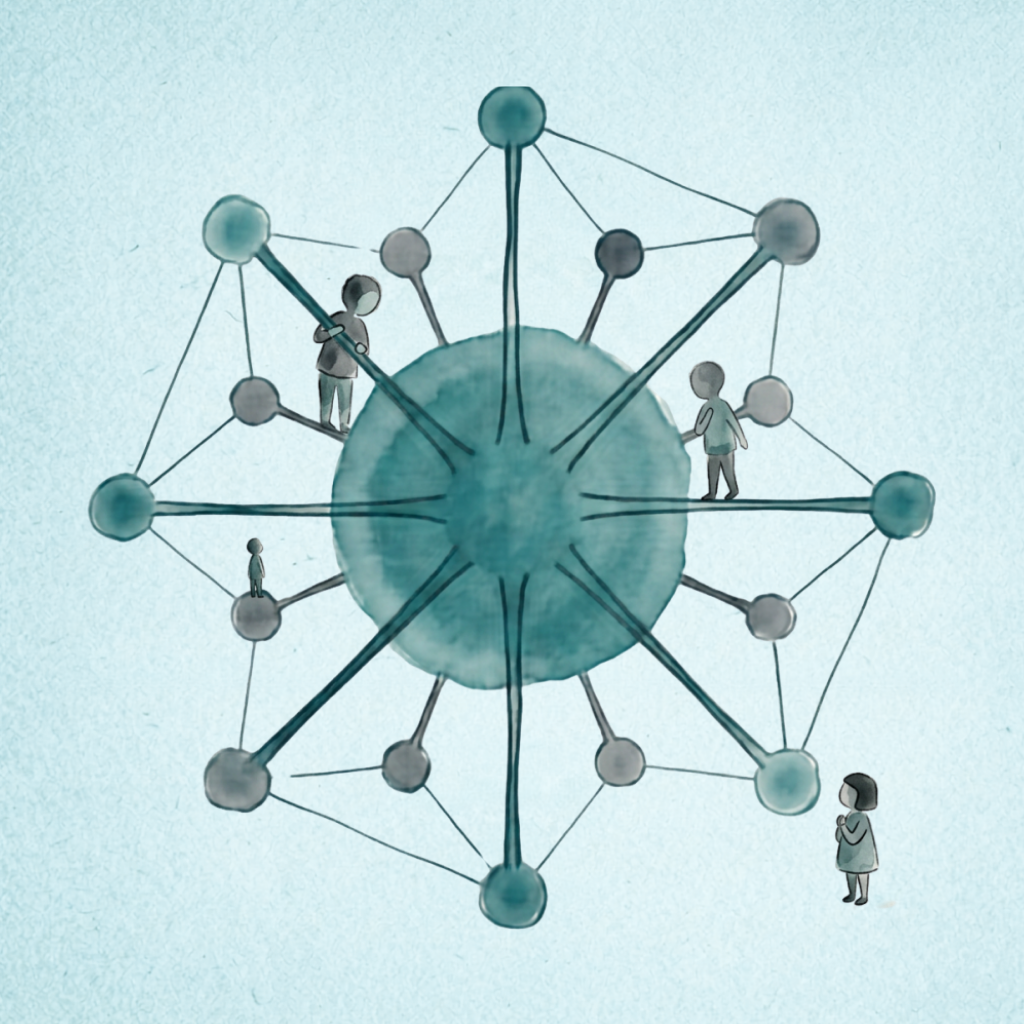
The Paediatric Enterprise System: paediatrics is not one service, it is six jobs
We fund and govern children's healthcare as if one business model, the acute hospital, can meet every need. It cannot. A coherent system has to do six different jobs.
Preventative and proactive outreach
Immunisation, early detection and advice that keep children well in the first place.
Standardised precision medicine at scale
The high-volume, low-variation care most children need, delivered locally.
Specialised regional-to-national care
Complex conditions needing concentrated expertise, reached through disciplined triage.
Personalised support for long-term conditions
Relationship-based care for children with complex, lasting needs.
Non-clinical local social care and support
The work on poverty, housing and family stability that drives clinical demand.
Triage and coordination across the system
The connective layer that lets the other five hold together.
Why one hospital model cannot do all six well
A single institution, funded and measured as an acute hospital, is built for two or three of these and starves the rest. The fix is not a better hospital. It is an operating model that can run all six jobs across a population. That is what we mean by a Paediatric Enterprise System.
The full strategic briefing
Read the complete argument
The complete paper sits here on the same page: twelve chapters, the policy recommendations and the conclusion.
Chapter 1
Why unsafe units stay open
1.1 A system designed to fail
The Royal College of Paediatrics and Child Health (RCPCH) Facing the Future report (2012) identified 218 inpatient paediatric units across England. Its central finding was blunt: the system could not staff all of those rotas safely and sustainably. The NHS at the time carried a shortfall of roughly 300 whole-time equivalents (WTE) at both Tier 1 and Tier 2, and a distorted trainee-to-consultant ratio of 1:1.21 against a safe target of 1:3 or 1:4.
By December 2024, the RCPCH Rota Gaps Survey confirmed that paediatric units were running at an average 20% staffing deficit. Rota gaps of 20-23.5% were recorded across England, Scotland and Northern Ireland. Only 16% of NHS Trust leaders reported that their Trust could meet demand for child health services. The GMC found that 15% of new entrants to the paediatric specialist register left it within five years of joining.
1.2 The structural trap
The reform failure is not intellectual. The 2012 analysis was correct. It is structural. Every Trust that has tried to close an inpatient paediatric ward has met the same dynamics: public consultation framed as "service removal", local political opposition, and the absence of a credible commissioner with the footprint to redesign the whole network rather than defend a single site.
The workforce crisis that was supposed to force the issue has instead been absorbed, through growth in consultant numbers, locum dependency, rota compromise, and the steady erosion of training quality. The result is a ballooning of unit costs and a two-tier paediatric system. The divide is not between rich and poor populations, but between units that are staffed and units that are technically open but functionally unsafe.
Unit fragility is not defined solely by whether a staffing rota can be filled over the next 6-12 months; it is also defined by the scale of investment required to prop a fragile unit up. The missing ingredient is decision intelligence: the discipline of turning what the system already knows into the decisions it keeps failing to make.
Chapter 2
George Eliot: an alternative that has worked for a decade
2.1 A service facing closure
George Eliot Hospital NHS Trust serves a population of approximately 300,000 in Nuneaton, Warwickshire, the catchment of a typical small-to-medium district general hospital. Its population sits in wards that feature consistently in the lower deciles of economic, social and educational disadvantage.
By 2012, the paediatric, A&E and anaesthetic services at George Eliot faced what looked like an inevitable slide towards closure or absorption into University Hospitals Coventry and Warwickshire (UHCW). Size, chronic underfunding and workforce stress had created a model that was neither clinically safe nor financially sustainable.
UHCW, with modern facilities and the associated PFI costs, was keen to shut the paediatric service at George Eliot entirely. That would have stripped services from a large population already carrying significant social and financial disadvantage.
2.2 Redesigning around what the population needs
The tipping point was a change in leadership and the articulation of a new vision. Rather than defending the inpatient ward as the anchor of the service, the model was redesigned around a single question: what does a population of 300,000 actually need, and what is the most reliable way to deliver it?
The George Eliot model was built on six connected principles:
- Leadership focused on developing people, to build and sustain a learning service with quality-improvement capability
- Reliable, connected information flow across primary and secondary care
- Respectful partnerships with all providers, GP practices, community services, UHCW and tertiary centres
- Integrating care wherever and whenever possible, reducing unnecessary handoffs
- An environment for innovation, through distributed leadership and the discretion to test change
- Addressing, over the long term, the national problem of poor childhood health outcomes at a local level
2.3 What changed in under a year
In less than a year, the following was achieved:
- The inpatient ward was closed, an honest closure, not a reconfiguration into a nominal non-admitting unit
- Ten WTE consultant paediatricians, the unit's full establishment, were recruited to deliver the vision, replacing the previous locum-dependent mix rather than adding to it
- A resident consultant rota was established, a consultant on site at all times
- Consultants rotated to UHCW to maintain inpatient clinical skills
- The locum middle tier was removed entirely
- Tier 1 doctors (trust doctors, QI fellows, GP trainees) were recruited to replace the trainee dependency
- Advanced nurse practitioners were developed within the nursing team
- Internal and shared governance systems were rebuilt from the ground up
2.4 The results: 28% to 4-6%
The outcomes were measurable and striking. The conversion rate to inpatient transfer fell from 28% to 4-6%, including direct ambulance transfer of critically ill children at the point of community pick-up. Around 17,000 children and families were seen at George Eliot each year. Ninety-five per cent received their complete care locally; only 5% required transfer for ongoing inpatient management.
The new-to-follow-up ratio was 1:1.2. GP engagement rose and improved once consultants were directly accessible, avoiding transfers where appropriate. Children who would previously have been referred elsewhere returned to local services. Day-case investigations, treatments and certain elective surgery were all retained on site.
2.5 Closure as the route to a stronger service
The George Eliot model was not really a technical redesign; it was a feat of vision and implementation. For national policy, the point is clear. Closing an inpatient ward need not mean losing a paediatric service. At George Eliot it was what allowed the service to be saved and improved. Persuading the public of that is the hardest part of any future reconfiguration.
Chapter 3
What the evidence has required since 2012
3.1 Three scenarios, only one delivered
The RCPCH modelled three scenarios for the future configuration of the 218 inpatient paediatric units then in existence. Only the first (no change) has effectively been delivered, by default rather than design.
3.2 Below 2,500 admissions, safe rotas break down
The RCPCH identified very small units (fewer than 1,500 emergency admissions a year, 30 units) and small units (1,501-2,500 admissions a year, 75 units) as the primary candidates for conversion or closure. Units below 2,500 admissions a year could not reliably sustain the three-tier staffing structure required for safe 24/7 inpatient cover under the European Working Time Directive.
Fourteen years later, the same threshold applies. Declining birth rates and the concentration of complex patients in larger tertiary centres have pushed more units below it. The 2024 RCPCH Rota Gaps Survey confirms that the staffing position has not improved but worsened.
Chapter 4
Fewer children, rising complexity
4.1 Fewer children, falling catchment volumes
The UK fertility rate fell to 1.41 children per woman in 2024, the lowest figure in 90 years, and far below the replacement rate of 2.1. For the first time outside wartime, deaths outnumbered births in the twelve months to mid-2023. The school sector is already responding: councils are consulting on mergers and closures as pupil rolls fall and per-pupil funding thresholds become unachievable at smaller sites.
For paediatric services, the implications are structural. A smaller child cohort means catchment volumes at already-small DGH paediatric units will keep falling, pushing more units below any clinically defensible viability threshold. Maternity units are also becoming fragile. The argument for network consolidation strengthens with every passing year.
4.2 Each child who presents is more complex
The paradox is that while the number of children is declining, the clinical complexity of those who present is rising sharply. The RCPCH 2024 Blueprint records that the proportion of children with eight or more chronic conditions almost doubled, from 7.6% in 2012/13 to 14.0% in 2018/19. Paediatric waiting lists grew 68% between April 2021 and January 2024. Community child health waiting lists stood at over 314,000 in March 2025, with 21.5% of children waiting more than 52 weeks, against 1.3% of adults.
Fewer children, then, but each one more complex. That combination strengthens the case for consultant-led care. An SSPAU with a resident consultant is better placed to manage high-acuity ambulatory presentations than a trainee-dependent inpatient ward running at 80% rota capacity with no clear referral pathway.
4.3 The shape of demand: a predictable base and a complex tail
Paediatric demand has a shape, and the system should be built to it. Most of it is a small, predictable set of problems. Ten conditions account for 42% of all emergency admissions, and ambulatory-care-sensitive conditions for up to two-thirds of admissions in the under-fives, mostly respiratory infection, gastroenteritis, febrile convulsion, UTI and injury. This is the high-volume base, and it is exactly the work that can be seen, treated and increasingly kept well at home, close to where children live.
The variety sits in the tail. Congenital, metabolic, rare genetic, oncological and neurodevelopmental disease give a specialist children's hospital around nine times the diagnostic range of a general one, by a formal measure of diagnostic diversity. Complex chronic conditions make up between 35% and 49% of inpatient cases in specialist centres, and the fastest-growing parts of the caseload, mental health and eating disorders, are climbing steeply. By the same measures, paediatrics ranks among the most varied of all clinical fields, well ahead of the concentrated, degenerative case mix that dominates adult and geriatric medicine.
Two populations, two different distributions of disease, inside one system. That shape is the argument for the network. The predictable base belongs locally, in ambulatory and home settings. The complex tail belongs concentrated, where specialist expertise and rare-disease volume hold together. The task is to build the architecture to match the demand, rather than force one undifferentiated model to carry both.
Chapter 5
Why now is different: a commissioner large enough to act
5.1 The commissioning footprint has changed
The move from 211 Clinical Commissioning Groups to 42 ICBs, and the further consolidation from 42 to an expected 26 larger ICBs under the NHS England and DHSC merger programme, has created, for the first time, a commissioning footprint large enough to plan and commission paediatric networks rather than defend individual sites.
Each ICB now covers a population of roughly 1.5-2.5 million. A Coventry-and-Warwick-scale ICB (around 1.3 million people) can sustain UHCW as a hub inpatient unit with George Eliot as a consultant-led ambulatory spoke, the exact configuration that has run since 2014. A larger ICB covering 2.5 million might sustain two hubs and four spokes. The network logic fits the ICB footprint in a way it could never fit an individual Trust or a small CCG. Local geography and infrastructure must still shape the network model.
5.2 A mandate to commission populations, not institutions
The NHS England Strategic Commissioning Framework requires ICBs to commission and decommission services on the basis of evidence; to conduct annual baseline mapping of capacity, demand and access; and to break population-needs analysis down to place level. From April 2027, direct commissioning responsibility for child health information services and specified paediatric services transfers to ICBs.
The framework makes this a requirement for ICBs, not a suggestion to consider. They are being asked to commission for populations. The George Eliot model is the kind of change a strategically commissioning ICB should specify: network-level paediatric provision that keeps local access for ambulatory care and concentrates overnight inpatient capacity at the sites that can staff it safely.
Chapter 6
The conditions a safe network must guarantee
The SSPAU model works only inside a network. Adopt the label without the architecture and the unit drifts back towards inpatient care, not through bad faith but through the daily pressure of children who need a bed and a hub that cannot always take them.
Recent experience in one English region shows how this happens, and it was foreseen. Before a new assessment-unit model opened, an independent clinical senate review in 2014 set out, with precision, the failure modes that later materialised: around 20% of admissions would need stays beyond 24 hours, with independent analysis putting the figure closer to 40%; consultant presence was planned to end before the evening peak in arrivals; and no capacity agreement was in place with the tertiary hub the model depended on. The review named the central risk plainly, that the assessment unit would become a de facto inpatient ward. A decade on, that is broadly what happened. No blame attaches to the clinicians or leaders involved, who made rational decisions without a network around them. The gap was in commissioning and governance.
The same review carries a harder lesson for anyone who believes better information alone changes decisions. The intelligence existed, and it was right. What was missing was the architecture and the mandate to act on it. Intelligence earns its keep only when it is paired with the structure and the will to use it.
The drift follows a predictable path wherever an SSPAU opens without a contracted hub:
- It opens with genuine intent to transfer every child needing more than 24 hours of care to the hub
- The hub has finite capacity and its own tertiary and neonatal caseload
- Night and weekend transfers carry clinical risk, ambulance delay and distress for families
- Consultants, right in each individual case, keep children overnight rather than transfer them into uncertainty
- Staffing grows to cover the overnight function, the label stays, and the inpatient role settles in
George Eliot is the counter-example, and the contrast carries the lesson. It sits a similar twelve miles from its tertiary hub, yet the outcome was the opposite, because the hub had guaranteed capacity, a bilateral SLA was agreed and actively managed, and the inpatient ward was honestly closed rather than relabelled. Architecture explains the difference, not geography and not the number of consultants.
The lesson is constructive, and it is now deliverable. A safe network has to guarantee the hub capacity, the binding transfer agreements, the honest definition of each site and the governance to act when one drifts, the conditions the next section sets out. Where a single accountable body now holds a capitated budget, as the Integrated Health Organisation model allows, a region has for the first time both the means and the mandate to build these in from the start, and to show the rest of the country how it is done.
Chapter 7
Commission the network, do not defend the site
The 2012 Facing the Future analysis correctly diagnosed the problem. Its five interlocking proposals failed not because they were wrong, but because each Trust was left to implement them alone, site by site, against the pull of institutional survival. What was missing was never the clinical model, but a commissioner with the footprint, authority and analytical capability to define and hold the network.
That commissioner now exists. The Integrated Care Board, operating across populations of 1.5 to 3 million, has both the statutory mandate and the geographic scale to do what no CCG or individual Trust ever could: define what paediatric care should look like across an entire sub-region, commission it as a network, and decommission the configurations that are unsafe, unsustainable, or both. Done well, the network mirrors the shape of demand set out in Section 4: ambulatory spokes for the predictable base, and a specialist hub for the complex tail.
7.1 What network commissioning means
Network commissioning is not mainly about drawing a diagram of sites; it is a decision about what each site in a defined geography is for, then the contracts that make the decision binding, the metrics that hold all parties to it, and the governance that stops individual Trusts drifting outside the agreed model, the drift that sets in wherever that architecture is absent, and not through bad faith.
For paediatrics, a networked model has four defining characteristics:
- A formally designated hub inpatient unit with guaranteed overnight capacity, staffed to RCPCH standards, holding bilateral SLAs with every spoke site in its catchment
- Formally designated ambulatory spoke sites, each serving 200,000 to 400,000 people, consultant-led, open extended hours, with defined transfer criteria and direct GP-to-consultant access
- Contractually binding transfer protocols, ambulance pre-notification, time-to-transfer standards, shared electronic records, and named clinical accountability at both ends of every transfer
- A network governance structure with the authority to flag drift, and a commissioner prepared to act on it
7.2 Why the network outperforms: sustainability, quality, risk
The case for network reconfiguration is usually framed around sustainability: units are too small, rotas cannot be filled, the status quo is unaffordable. That is true as far as it goes, but it casts reconfiguration as damage limitation rather than improvement. The evidence from George Eliot, and from comparable ambulatory models abroad, shows the network model does more than survive. It performs better than the fragmented inpatient estate on the measures that count: sustainability, quality and risk.
Sustainability: A spoke site operating the SSPAU model employs a consultant body rather than a rota of locums. Consultant-led ambulatory services do not need the three-tier 24/7 structure that makes small inpatient rotas unsustainable, so the staffing maths changes completely. A site with ten WTE consultants delivering ambulatory care across extended hours is sustainable; the same site trying to hold an overnight inpatient ward with that workforce is not. Reconfiguration does not cut the clinical workforce. It puts it to work in a structure that holds.
The economics follow the same logic, and they run in the system's favour. A small inpatient unit carries the cost of a three-tier overnight rota and heavy locum cover; the ambulatory model runs on a consultant body across extended hours. George Eliot's ten consultants were the full establishment, recruited to replace a fragmented mix of locums and short-term cover, not to add to it. The model reallocates workforce rather than expanding it, and the locum and overnight premium it removes is money freed to fund prevention. The precise figures are specific to each site and need proper modelling, but the direction is clear: a networked model, run well, costs less than propping up the fragile estate it replaces.
A resident on-call consultant model also attracts paediatricians early in their careers. It is appealing as a rotation into the larger centres, to maintain inpatient skills, develop wider relationships, and progress towards other models of care.
Quality: The quality case is equally compelling and less often made. A consultant present in an ambulatory setting during working hours, available to GPs by direct telephone, able to see children the same day, able to perform day-case procedures and ambulatory investigations, delivers faster, more expert care to the 95% of children who do not need overnight admission. The 5% who do are transferred to a unit specifically resourced and staffed for inpatient care, rather than admitted to a ward running at 80% rota capacity with a locum registrar as the senior decision-maker.
The George Eliot model tripled the GP referral rate within its first year. When consultants are easy to reach, GPs come to rely on them, refer appropriately, and children are diagnosed and treated earlier. For the great majority of children and families, this means better care, delivered sooner.
Risk: The risk case is the one most often avoided in public debate, because it means saying something uncomfortable: a small inpatient paediatric unit with a 20% rota gap, a high-churn locum-dependent middle tier, and a trainee-to-consultant ratio of 1:1.2 is more dangerous than a well-designed ambulatory unit with a consultant on site. The RCPCH rota-gap data, the North of England Clinical Senate review, and the pattern of SSPAU drift all point the same way: a unit that is open in name but structurally unsafe generates risk rather than safety. Network consolidation, done properly, reduces that risk; continued fragmentation, propped up by drift and locum cover, increases it.
Chapter 8
Populations can be served well without local inpatient beds
8.1 George Eliot: England's proof of concept
The George Eliot model is described in detail in Section 2. Its significance here is its longevity and its population context. After more than a decade of operation, serving a population in the lower deciles of socioeconomic advantage, with a GP referral rate three times that of the inpatient predecessor and a 4-6% inpatient conversion rate, it remains the best-evidenced ambulatory paediatric model in England, and an established, replicable one rather than a pilot.
The replication conditions are well understood: consultant-led from day one; explicit closure of the inpatient ward rather than reconfiguration into a nominal non-admitting unit; a bilateral SLA with the hub inpatient site; and a leadership team with the clarity and courage to reframe closure as transformation. None of these conditions is exotic. All of them require active commissioning intent.
8.2 Scandinavia: the same model, better outcomes
The Nordic health systems (particularly Denmark and Sweden) have for two decades run paediatric services on a network model that concentrates inpatient care at regional centres and delivers ambulatory and extended assessment care at local sites. Danish paediatric units routinely serve populations of 300,000 to 500,000 through consultant-led ambulatory models, with inpatient care concentrated at university-hospital level. The outcome data, including child-mortality comparisons that show Sweden losing fewer children than England on a like-for-like basis, reflect, in part, the quality of locally accessible, consultant-led frontline paediatric assessment.
The comparison is not a call to copy the Nordic systems wholesale. NHS structures, funding mechanisms and workforce pipelines differ from theirs. It is offered as proof that the thing can be done: ambulatory paediatric models can achieve better outcomes than fragmented inpatient networks, and the gap in child-health outcomes between England and Scandinavia is not explained by the absence of small inpatient wards.
8.3 What every working model shares
Analysis of the George Eliot model, comparable NHS ambulatory configurations, and international evidence identifies a consistent set of conditions that separate working models from SSPAU drift:
- Honest closure: the inpatient ward is formally closed, not relabelled. That choice is not cosmetic; it sets the staffing model, the rota structure, and the contracting relationship with the hub
- Consultant primacy: consultants are the core workforce, not a supervisory layer over a trainee-dependent middle tier. The consultant sees the child; the GP speaks to the consultant; the family receives an expert assessment
- Hub capacity guarantee: the hub inpatient unit has contractually committed overnight capacity for transfers from each spoke, with agreed time-to-bed standards and named clinical accountability
- Extended-hours operation: the ambulatory unit operates for at least 14 hours a day, seven days a week, covering the peak paediatric presentation window of 8am to 10pm. The resident-on-call 24/7 model is proven, as at George Eliot
- Integrated information: a shared electronic patient record across spoke and hub, accessible to GPs, ambulance services and community teams, removing the information discontinuity that causes unsafe transfers and duplicated investigations
- Active network governance: a joint clinical governance structure spanning the network, with the authority to review transfers, flag drift, and hold both spoke and hub to agreed standards
Chapter 9
Bradford: the system already being built
9.1 A population that made innovation necessary
Bradford is the 12th most deprived local authority in England, with the fourth highest rate of child poverty in the UK. Two in five children grow up in relative poverty. The rate of child death in Bradford's most deprived communities is four times higher than in its least deprived, and two-thirds of all child deaths in the district occur among children in the poorest fifth of the population. Children born into the poorest fifth of UK families are almost 13 times more likely to experience poor health and educational outcomes by the age of 17. Health inequalities added an estimated £9 million to the cost of hospital care in Bradford across 2022 and 2023 alone, almost all of it avoidable. This is the population Bradford's paediatricians chose to design for.
9.2 Four models, one system
Over the past decade, four clinical teams in Bradford have built, separately, what amounts to a single integrated paediatric system.
The Ambulatory Care Experience (ACE), opened in December 2017 by Dr Mathew Mathai, treats acutely unwell children at home. Specialist children's nurses deliver care in the family's home under consultant oversight, seven days a week. In its first nine months, 87% of appropriately referred children received their entire episode of care at home, with no adverse events. ACE won the Health Service Journal's 2018 prize for Improvement in Emergency and Urgent Care. To make the model durable rather than dependent on a few exceptional individuals, the team built the Enhanced Paediatric Nursing Skills programme, a Master's-level qualification any trust in England can now use.
Dr Eduardo Moya built an anticipatory care model for children with complex, multi-system needs: identifying those at high risk of deterioration, building care plans before the crisis, and coordinating health, education and social care around each child. Admissions fell. Deteriorations were prevented. Then the funding ran out.
Dr Eve Blanchard moved specialist paediatrics upstream, embedding paediatricians in Bradford's Primary Care Networks. Each clinic is both a consultation and a teaching moment, so GP confidence grows and referrals fall. The capability stays in the community rather than locked inside the hospital. NHS England's March 2026 Neighbourhood Health Framework now asks every ICB to build exactly this. Bradford already runs it.
Beneath all three sits Born in Bradford, an independent eighteen-year birth cohort following more than 13,000 children, and Connected Bradford, which links health, social care, education, housing and environmental records for over 800,000 people across four decades. Together they form a population health intelligence system of a kind no English ICB currently holds: one that can see a Bradford child whole, identify who is at risk, and show which interventions work.
Read together, the four are not four pilots but one system: an ambulatory arm, a complex-needs arm, a primary-care arm and an intelligence arm, already delivering the NHS 10 Year Health Plan's three shifts at once: hospital to community, sickness to prevention, and analogue to digital.
9.3 Why proven models keep losing their funding
Bradford's problem is not the clinical model but the way decisions and funding are structured around it. Every sustainability failure here follows one pattern: a clinical team builds something that works, its costs fall on one provider, and its gains spread across many, the emergency department that sees fewer attendances, the ward that avoids the admission, the ambulance service that does not make the conveyance. No single commissioner holds a budget that captures enough of the gain to justify funding the service year after year. The grant ends, but the need does not. Dr Moya's anticipatory care model did not stop because it failed; it stopped because the money was structured so that success paid no one who could keep it going. It is the same decision problem described throughout this paper, here in human form.
9.4 The mechanism that changes the maths
What has changed is not the diagnosis but the conditions for acting on it. West Yorkshire ICB commissions for a population of 2.4 million, large enough to fund Bradford's models as a network rather than a sequence of pilots. The 10 Year Health Plan's Integrated Health Organisation model goes further: a single body holding a capitated budget for primary, community, secondary and mental health care for a defined population. Under that model, the financial logic that destroyed Dr Moya's service reverses. The organisation that funds prevention is the same one that gains when admissions are avoided. Prevention stops being altruistic and becomes financially rational. The service that ran out of project money becomes a core investment that pays back into the budget of the body making it. The same arithmetic underwrites the paediatric chain: when one body holds the capitated budget across the network, the savings from prevention, home care and avoided admissions land with the organisation paying for them, so the chain can fund the upstream work that isolated trusts never could.
9.5 What must now happen
Bradford's clinicians have done their part, in some cases for nearly two decades. The system must now do its. West Yorkshire ICB should commission what has been proven, not pilot it again. Bradford Council, schools and the voluntary sector should be treated as co-producers of children's health rather than adjacent stakeholders, because Connected Bradford's data shows housing, neighbourhood and education driving much of the harm. And Bradford Teaching Hospitals, holding an integrated, capitated contract, should make ACE, anticipatory care, PCN-embedded paediatrics and Connected Bradford permanent features of the system rather than initiatives that survive on goodwill. Bradford has already built the model the NHS says it wants. The remaining task is not clinical; it is to commission, fund and govern it so that it lasts.
9.6 What the rest of the country can learn
Bradford is unusual in what it has built, but not in what it faces. Every ICB has its own version of these innovations: proven local models that keep being piloted and then quietly defunded, because the gains land across the system while the costs sit with one provider. The lesson is not that other places should copy Bradford's services line by line. ACE, the Enhanced Paediatric Nursing Skills qualification and the Connected Bradford data model are already portable; the curriculum exists, the credential exists, the evidence exists. The barrier everywhere is the same, and it is architectural rather than clinical. The country does not lack proven models; what it lacks is the commissioning intent and the financial structure to find them, fund what works, and hold them together as a system. Bradford shows what becomes possible when a system finally decides to do that. It also shows the cost of waiting.
Chapter 10
Alder Hey: the art of the possible beyond the building
10.1 The acute hospital as the core, not the ceiling
The biggest barrier to reforming NHS paediatric services is not financial but conceptual. The default frame of reference for trust leadership is the institution: its beds, its rotas, its regulatory compliance, its commissioned activity. Population need is treated as an input to that institution rather than as the organising principle of everything it does. Changing that frame is the prerequisite for any lasting reform.
Strasys worked with Alder Hey Children's NHS Foundation Trust, one of the world's top fifteen specialised children's hospitals, which cares for more than 330,000 children, young people and families every year. Alder Hey was already a pioneer in clinical innovation. But the population it serves was changing faster than the model could absorb. Up to 70% of school-age children were overweight or obese, autism diagnoses had risen by three-quarters in a single year, and the waiting list had reached 23,000 and was growing by 4% a month. Demand, complexity and inequality were rising together, against real pressure on staff wellbeing and a model built mainly to deliver commissioned hospital services. The challenge was not to write a new strategy. It was to rebuild the leadership's understanding of what Alder Hey was for. The trust chose to treat its acute expertise as the core asset to deploy across a population, not the boundary of what it could offer.
10.2 Looking beyond the building
Strasys designed and led a structured process of discovery and design that took the Alder Hey board beyond the walls of the hospital. It combined advanced analytics, subject-matter expertise, scientific rigour and a deliberate process of personal and collective leadership development. The analysis resolved the population into ten distinct groups of children and families, and then into four inter-related models of care, each with different needs. The work changed executive roles and governance, and pulled previously fragmented agendas into a single, population-focused framework. Critically, it gave children's population need a dedicated voice in the trust's governance and planning, rather than leaving it as one priority among many. The conclusion the trust drew was simple. The job was to reach beyond the building, into the communities, schools and homes where children actually live.
10.3 A vision written from the child's point of view
The four models of care were written in the child's own voice: get me well, make my care more personal, improve my life chances, and bring me the future today. They were not service lines. They were jobs the system has to do, described from the point of view of the child who needs them done. The work set a vision for 2030, of a healthier, fairer and happier future in which every child and young person achieves their full potential. A major acute provider, holding the deepest clinical expertise in its system, chose to organise that expertise around the life of the child rather than the activity of the hospital. The acute hospital stays central; what changes is what central means: the core of a networked system of expertise, rather than the ceiling of a single building.
“We were keen on developing an evidence-based approach that was led by what children and young people want and not another NHS strategy developed through an institution lens.”
John Grinnell, CEO, Alder Hey Children's NHS Foundation Trust
“I don't want to spend a lot of time in hospital, but I need help to be independent and to live life to the full.”
A young person, from Alder Hey's engagement with children and families
Alder Hey answers a question every ICB now faces. If a world-leading acute hospital can look beyond its own building and organise around the child, what stops the rest of the system from doing the same? The answer is not capability but the decision to organise expertise as a system. The next section sets out how.
Chapter 11
From institutions to a Paediatric Enterprise System
11.1 Paediatrics is six businesses, not one
The Alder Hey experience exposed a deeper structural problem. NHS organisations are typically funded and governed as if a single business model (the acute hospital) can serve all the health needs of a population. It cannot. A coherent paediatric system, anchored to population need, requires six distinct but interlocking business models, each serving a different job the system must do:
- Preventative and proactive outreach: Primary prevention, immunisation, advice and early detection, for the local population. High reach and low cost, but currently the least resourced and least governed model in NHS paediatrics.
- Standardised precision medicine at scale: High-volume, low-variation treatment delivered locally to guideline-concordant pathways. This should cover most paediatric ambulatory activity, and is the model SSPAUs most directly support.
- Specialised regional-to-national care: Complex conditions and co-morbidities needing multidisciplinary input, specialist skills or nationally commissioned facilities, reached through disciplined triage rather than defaulted to for every child.
- Personalised local support for long-term conditions: Personalised, relationship-based support for children with long-term conditions, integrated across health, social care, education and mental health. The doubling of children with eight or more chronic conditions (2012-2019) makes it the fastest-growing and least-served model.
- Non-clinical local social care and support: Care addressing the social determinants of health: poverty, housing, education and family stability. With three in five children in poverty and 70% overweight or obese, it is central to what drives clinical demand.
- Triage and coordination across the system: The connective architecture, appropriate access, continuity, intelligent routing and real-time data, that makes the other five cohere. Without it they fragment; with it the system becomes self-correcting.
These six models are not sequential or hierarchical. They operate in parallel, and their relative proportions shift with population demographics and epidemiology. A system that invests predominantly in models three and four (acute and specialist care) while under-investing in models one, two, five and six will produce the familiar pattern of escalating demand, poor outcomes and financial pressure that characterises NHS paediatrics today.
Each of these six models needs a different capability, a different workforce, different governance and a different way of measuring success. Prevention depends on population health and community partnerships; standardised care on scale and consistency; specialist care on concentrated expertise; long-term-condition support on continuity; social support on multi-agency integration; coordination on system leadership.
The challenge for leaders, then, is not how to keep individual departments going but how to organise these business models coherently across a population. That is one of the strongest reasons to move beyond the institution-centred model, and the gap a Paediatric Enterprise System is designed to fill.
| Business model | Core capability | Workforce | Success measure |
|---|---|---|---|
| Prevention | Population health & community partnerships | Public health, community nurses | Vaccination rates, early detection |
| Standardised care | Scale, consistency & productivity | Consultant-led ambulatory teams | Same-day access, guideline adherence |
| Specialist care | Concentrated expertise | Sub-specialist MDTs | Outcomes by condition, triage discipline |
| Long-term conditions | Continuity & coordination | Named key workers, cross-sector teams | Acute episode reduction, family experience |
| Social care | Multi-agency integration | Social workers, education, voluntary sector | Determinant indicators, demand reduction |
| Triage & coordination | System leadership & orchestration | System leaders, data analysts | Routing accuracy, system coherence |
Table 1. Each business model requires a different capability, workforce, governance structure and success measure. A Paediatric Enterprise System organises all six coherently across a population.
In organisational terms, this framework has a name: a paediatric chain, or managed group. Rather than leave each centre to run its own workforce, governance, training and improvement, a chain groups several centres under one operating model and one leadership. It captures both halves of the value: economies of scale come from shared infrastructure, procurement and a common operating model. Economies of expertise and learning come from one workforce, one improvement engine and one body of clinical knowledge deployed across every site. A single trust can run a chain across the centres it holds; an ICB can commission one across a sub-region. Either way, the chain is what turns a collection of fragile units into one resilient system, while care stays local.
11.2 Turning population insight into commissioning decisions
The policy imperative described in this paper, using ICB strategic commissioning authority to build viable, population-responsive paediatric networks, requires both the analytical methodology demonstrated at Alder Hey and the six-model framework as its operational foundation.
Population-needs analysis, conducted at ICB-footprint level, must answer three questions for every paediatric network. What is the actual burden of need across all six dimensions of the system's job? What is the current distribution of resource and capability across those six models? And where is the mismatch most acute, and most amenable to system-level intervention?
The answers should drive three commissioning decisions:
- Which services should be delivered where? Determine the network configuration through a structured clinical service review, the location of SSPAU-model ambulatory hubs, and the thresholds for specialist referral.
- How should resources be reallocated? Shift investment from over-resourced acute models towards prevention, community-based long-term-condition support, and system coordination, guided by a clear value index.
- What governance architecture is needed? Build a dedicated governance voice for children's population need into system commissioning decisions, so it is not crowded out by competing priorities.
The Alder Hey experience shows that this process is not merely technical. It requires the emotional engagement of clinical and executive leadership with a genuinely different account of what their organisation is for. The board must move from compliance to agency, from delivering what is commissioned to owning what the population needs. That shift does not happen through strategy documents alone. It requires structured discovery, rigorous data, and the kind of facilitated challenge to institutional assumptions that produces lasting commitment to change.
ICBs that commission this kind of population-needs analysis, and use its findings to redesign paediatric networks around all six business models, will be better placed to achieve clinical safety and financial sustainability than systems that keep treating service viability as a narrow question of bed numbers and consultant rotas. The Alder Hey example does more than broaden the argument. It shows how population insight can be translated into a practical commissioning logic. The next task is to move from that system-level logic to implementation, building the data foundation, decision intelligence and leadership infrastructure required to make network redesign real in day-to-day practice.
Chapter 12
From intent to delivery: data, decision intelligence and leadership
Sections 10 and 11 set out why paediatric reform must begin with population need, and how the Alder Hey experience and the six-business-model framework provide a stronger organising logic for commissioning than the traditional hospital-centred view. This section turns that logic into action. The structural conditions for transformation are now in place, but implementation requires three capabilities that earlier attempts consistently lacked: rigorous network-level data, a decision intelligence approach to configuration, and the leadership and organisational capacity to sustain change.
12.1 The data every ICB needs first
Every ICB considering paediatric network reconfiguration needs, as a minimum, a clear-eyed analytical baseline across the following dimensions:
- Current emergency admissions by site, broken down by age band, clinical category, length of stay and outcome, distinguishing the 4-6% that genuinely require overnight inpatient care from the 94-96% that do not
- Current rota fill rates, locum spend, and trainee-to-consultant ratios at each site, translated into annualised risk exposure, not just vacancy percentages
- Five-year birth-cohort projections by place, not just at ICB level, but ward-level population modelling that shows where falling birth rates will push sites below viability thresholds within the planning horizon
- Transfer time and outcome data for children moved between sites, including ambulance response times, time-to-definitive-care, and family-experience metrics
- GP referral patterns, direct-access usage, and community paediatric waiting lists, to establish the true demand picture that inpatient-oriented services currently obscure
This data exists. It sits across NHS England, ICB analytics teams, Trust information departments, ambulance services and primary care networks. A structured evaluation system can assemble it at network level. It has not been assembled because no commissioner had the footprint or the incentive to do so. The ICB now has both.
12.2 Model the network, do not negotiate it
Data analysis produces a picture. Decision intelligence converts that picture into a network design that commissioners, clinicians and communities can understand, interrogate and own. A decision intelligence approach to paediatric network design means:
- Modelling network configurations, not defending existing ones. The question is not "can this site remain open?" but "what is the optimal network for this population, and which site should occupy which role within it?"
- Scenario analysis that makes the safety, quality and workforce implications of each configuration explicit and visible, including the do-nothing scenario, which is not a safe baseline but an active choice to accept escalating risk
- Transparent public presentation of the modelled options, so that consultation is conducted on the basis of evidence rather than site-specific political loyalty
- Dynamic planning, building the network design on assumptions that can be updated annually as birth-cohort data, activity volumes and workforce availability change
The Strasys decision intelligence framework, developed across NHS and international health-system clients, provides exactly this capability. It combines population health modelling, workforce scenario analysis, and service configuration optimisation into a form that ICB leadership, Trust boards and clinical teams can use as the basis for decisions, rather than the basis for further deferral. This is what Decision Intelligence for Healthcare means in practice: not more dashboards, but better decisions.
12.3 Structure does not hold without leadership
The most consistent finding from research on healthcare reconfiguration, and from George Eliot in particular, is that structural change does not hold without leadership capability. What went wrong in the regional example was not clinical competence or institutional bad faith, but a model change made without the commissioner-led governance, the bilateral contractual architecture, and the shared clinical leadership the model requires.
Building the capability for sustainable change means investing in three areas at once:
- ICB commissioning capability: the analytical, clinical and legal expertise to design a network, contract it, and hold it, including the capability to resist the political pressure that every reconfiguration generates from site-specific stakeholders
- Clinical leadership at hub and spoke: consultants who understand the network model, are committed to it, and have the authority and relationships to make it work across organisational boundaries. George Eliot succeeded because its consultant body was recruited for the vision, not inherited from the preceding model
- Organisational development across the network: the governance structures, joint clinical meetings, shared quality-improvement methodology, and leadership culture that treat the network (not the individual Trust) as the unit of analysis
None of this is uniquely difficult. It is the ordinary work of system leadership, applied to a domain (paediatric network design) where it has not previously been attempted at scale. The ICB has the mandate. The George Eliot model has proved the clinical approach. The decision intelligence tools exist to make the analytical case. What is required is the will to begin, and the leadership infrastructure to see it through.
12.4 Carrying the public, the clinicians and the providers
The clinical case is the easier part. Reconfigurations rarely fail because the model is wrong. They fail in the public consultation, in the relationship between providers, and in the engagement of clinicians. A commissioner serious about this work plans for the politics from the first day, not the last.
With the public, lead with the child, not the building. The story is not that a ward is closing, but that the great majority of children will be seen and treated locally, faster and by a consultant, with the small number who need overnight care taken to a unit that can keep them safe. Frame that before the first leak, bring scrutiny committees in early, and hold to the George Eliot lesson that an honest closure is the route to a better service rather than the loss of one.
With providers, a chain does not have to mean a takeover. It can be a lead-provider or shared-governance arrangement that keeps each site's identity and local team while sharing one workforce model, one set of standards and one accountability for quality. The work belongs to the provider collaborative, convened by the commissioner, not imposed on it. That distinction decides whether trust chief executives become partners or opponents.
With clinicians, build the model with them, as George Eliot and Bradford did, and engage the royal college and the consultant body before the design is fixed rather than after. Reconfigurations done to clinicians drift or collapse. The ones done with them hold.
Strategic briefing
Policy recommendations
The policy recommendations below are addressed to ICBs, NHS England and the Department of Health and Social Care. Together they convert a correct but stalled diagnosis into a commissioning programme: design the network, contract it, resource it, and govern it.
| Policy element | Recommendation |
|---|---|
| Strategic commissioning mandate | ICBs must define, contract and govern paediatric networks across their full footprint, not ratify existing Trust configurations. The ICB commissions the population. Trusts configure to fit the network. |
| What "networked" means | Formally designated hub inpatient units with capacity-guaranteed SLAs; formally designated ambulatory spokes with honest inpatient closure; binding transfer protocols; joint network governance with enforcement authority. |
| Sustainability | Consultant-led ambulatory models are workforce-sustainable; trainee-dependent small inpatient units are not. Network consolidation resolves the workforce paradox. It does not worsen it. |
| Quality | Ambulatory spoke models with resident consultants deliver faster, more expert care to 95% of children. The 5% requiring inpatient care are better served at a properly resourced hub than at an understaffed local ward. |
| Risk reduction | A 20% rota gap on a small inpatient ward is a clinical risk. An SSPAU without a hub SLA is a governance risk. Both are greater than a well-designed network with an honest ambulatory spoke. |
| Data foundation | ICBs must commission a network-level analytical baseline: activity by clinical category and length of stay; rota fill and locum spend; five-year birth-cohort projections; transfer-outcome data; GP referral patterns. |
| Decision intelligence | Network design must be modelled, not negotiated. Scenario analysis should make the implications of each configuration explicit, including the cost of the do-nothing baseline. |
| Capability and leadership | ICB commissioning capability, clinical leadership at hub and spoke, and organisational development across the network must be invested in simultaneously, not sequentially. |
| Hub SLA requirement | Every ambulatory spoke must hold a formally contracted, capacity-guaranteed bilateral SLA with its hub before commissioning approval is granted. |
| Models that work | George Eliot / SSPAU, extended-hours consultant-led ambulatory care, and Scandinavian network models all show that populations of 200,000-400,000 are well served without local inpatient beds, when the network conditions are right. |
| Where to start | Begin with a low-regret network-level baseline. Map every paediatric site against the conditions a safe network requires, identify which are already drifting, and model the options openly. No service change, and no closure, is required to take the first step. |
Strategic briefing
Conclusion
The case for transforming paediatric services has been made many times, and made correctly. What has been missing is not evidence or clinical imagination, but commissioning intent.
George Eliot proved the model: an honest ambulatory reconfiguration that keeps local access for the great majority of children and concentrates overnight care where it can be staffed safely. Bradford proved the system: acute care at home, anticipatory care for complex children, paediatrics in neighbourhoods, and the linked intelligence to run all three. One redesigned the unit; the other redesigned the whole place around the child.
Most NHS reconfiguration has failed because it argued about buildings when the real argument is about architecture. A fragile unit is not made safe by keeping its sign above the door and stretching the workforce further. The question for each site is what role it should play in an ICB-scale network, and what capabilities should sit around it. That is why the footprint matters now: a single Trust can defend a site but cannot design a network, and a former CCG could fund a pilot but could not hold the system together. The ICB can do both.
None of this closes a ward on day one. What is urgent is the decision; closures, where they come at all, come later and safely. The first move is a low-regret one: map every site against the conditions a safe network needs, then model the options in the open before anything is decided. George Eliot provided the discipline. Bradford provides the ambition. The ICB now has the footprint to turn both into a commissioning programme rather than another admired exception.
From idea to action
The Paediatric Network Baseline
Moving from idea to outcomes requires a shared, evidence-based picture of where a system actually stands. For leaders ready to test the argument against their own footprint, we offer the Paediatric Network Baseline: a Decision Intelligence assessment of paediatric provision across an ICB or provider-collaborative footprint.
- Map current provision across every paediatric site on one footprint-wide view
- Identify fragile units before fragility becomes a crisis
- Assess workforce and clinical risk in terms a board can act on
- Model hub-and-spoke options openly, including the cost of doing nothing
- Test the access and equality implications for the children affected
This is what Decision Intelligence for healthcare means in practice. Not another dashboard, but a clearer decision.