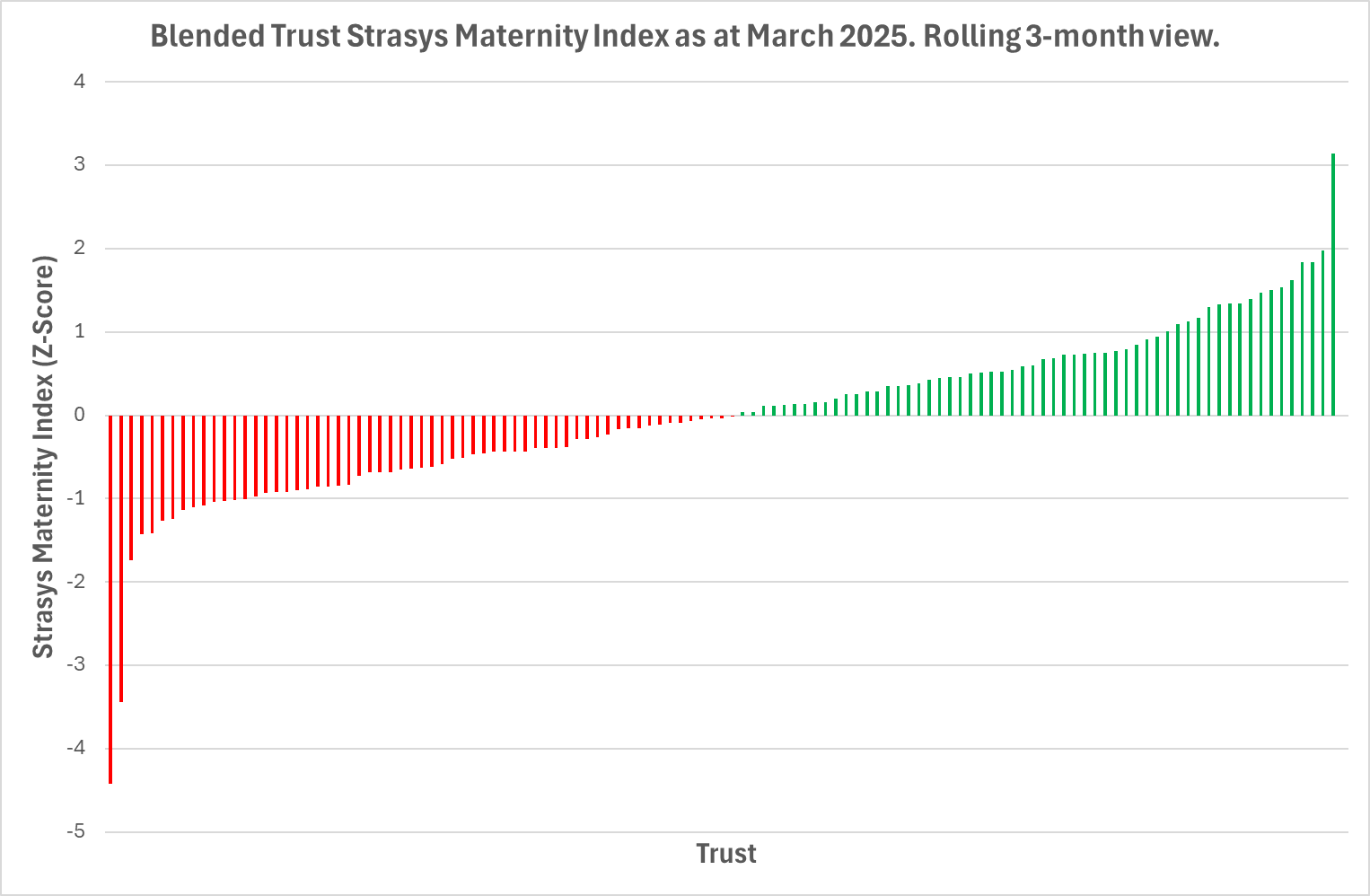
Current Performance
How a trust is performing right now, based on clinical, safety, and outcome indicators, normalised using Z-Score comparison across every trust in England providing maternity services.
Leaders are surrounded by data but lack a unified view connecting safety, equity, workforce, and experience. The result: fragmented improvement, reactive decisions, and limited assurance that services are learning.
The Strasys Maternity Index changes this. With Mia, your Maternity Intelligence Agent, you ask questions in plain English and get answers backed by your data.
The SMI triangulates current performance, trajectory and scale, revealing where the system is under most pressure and where intervention will have the greatest impact.
How a trust is performing right now, based on clinical, safety, and outcome indicators, normalised using Z-Score comparison across every trust in England providing maternity services.
Whether things are improving, static, or deteriorating. A trust might score well today but be on a declining trajectory. The kind of early warning sign that CQC inspectors look for and boards often miss.
How many people are affected. Some trusts have high risk scores but serve few patients. The SMI adjusts for scale, showing which trusts present the greatest risk to overall system safety based on how many families they serve.
Most maternity tools
Report retrospective metrics in isolation. Safety data sits in one system, workforce in another, experience in a third. There's no connection between them, no trajectory, no volume context.
The Strasys Maternity Index
Connects safety, workforce, equity, and experience data to reveal the system relationships behind outcomes. Uses predictive trend analysis rather than backward-looking reporting. Adjusts for birth volume so leaders see system-wide risk, not isolated trust performance.
Four short films. Each takes a real question and shows Mia finding the answer in the national data. Tap any film to play.
Mia reads the whole service in the time it takes to pour a coffee, naming the principal risks and the actions most likely to improve care, while the judgement stays with the clinicians and the board.
A safety recommendation went to one trust every month for a year while progress stayed near zero, and Mia surfaces that buried signal early and turns it into action for this week.
Mia traces exactly what carried this trust from 98th of 119 to number one in a year, serving one of the country's most deprived populations, so the proof can spread across a system.
A trust can hold a Good rating from a three-year-old inspection and still slide from the top ten to the bottom ten in eleven months, which is why Mia watches the months in between.
Please note sequences may have been shortened. Examples use real national data, with the trusts anonymised. For providers and ICBs, Mia can be in your hands within minutes. If you would like to see what it shows for your own organisation, get in touch.
Mia is the first live capability of SIA, the Strasys Intelligence Agent, built into the SMI. Instead of clicking through dashboards and reading charts, you ask questions in plain English, and Mia answers with evidence drawn directly from your trust's data, benchmarked against every maternity provider in England.
Ask questions about your service in natural language
"How do our Apgar scores compare to similar-sized trusts?" Mia gives you the answer, the context, and the trend.
Understand why your metrics are moving
AI-generated explanations connect workforce data, safety indicators, and equity measures to surface the drivers behind your numbers.
Get suggested actions to improve care
Mia recommends evidence-based improvement actions, grounded in your specific data and context.
Compare your trust against peers in conversation
"Show me trusts with similar birth volumes that are improving faster on PPH rates", and Mia shows you exactly who, how, and what's different.
Mia turns the SMI from a dashboard you check into an intelligence partner you consult. Every answer is grounded in your trust's actual data, benchmarked nationally, and traceable to source.
Responsible AI commitment: Mia augments human decision-making. It does not replace clinical judgement. Every recommendation is traceable to source data, every explanation is auditable, and no clinical action is automated. Mia operates within sovereign UK data environments. The humans who carry responsibility for patient care always make the final decision.
The SMI's initial national analysis has surfaced patterns that existing reporting tools miss. These findings are drawn from the Index's first full data cycle across all trusts providing maternity services in England.
The Index identified two large-volume trusts combining a high number of births with top-five risk scores and clear 12-month declines in key clinical areas including neonatal health, post-partum haemorrhage, and perineal trauma.
Several trusts with acceptable current performance are on deteriorating 12-month trajectories. The kind of early warning that standard reporting misses until outcomes worsen visibly.
At the other end, trusts like Homerton Healthcare show a substantial lead in low risk relative to high birth volume. Evidence that safe, high-quality maternity care at scale is achievable and learnable.
See exactly where your unit sits relative to every other trust in England, and whether the trend is moving in the right direction.
Build board-level assurance grounded in evidence that maps directly to Ockenden recommendations and CQC Well-Led criteria.
Identify variation across your system's providers and target resources where they will have the greatest impact on safety and equity.
A single, consistent view of maternity risk across all providers, replacing fragmented datasets with decision-ready intelligence.
The SMI is available as a secure web application on a subscription basis. Data refreshes monthly from national sources. No patient-level data is required from your trust. No procurement headaches. Access via secure login.
Available at trust, provider group, ICS/ICB, regional, or national level.
Web App
No installation
Monthly Refresh
National data sources
Sovereign Data
UK hosted · IG compliant
The SMI draws on 100 measures from national maternity datasets covering all NHS trusts in England with maternity services. These include clinical outcome indicators such as Apgar scores, post-partum haemorrhage rates, and perineal trauma, alongside safety metrics, workforce indicators, and equity measures. All data is sourced from published national datasets with no patient-level data required from individual trusts.
Each trust's score uses Z-Score comparison to normalise individual metrics across England, a weighting system that prioritises higher clinical concern factors, rolling period averaging to reduce outlier distortion, 12-month trend analysis to detect trajectory, and birth volume adjustment to identify system-wide risk. Measures are disregarded where low volumes could distort findings.
Yes. The SMI's 100 measures map to the quality and safety domains highlighted in Ockenden report recommendations, CNST incentive scheme requirements, and CQC Well-Led inspection criteria. It provides the evidence base boards need for regulatory assurance, connecting clinical reality with governance accountability.
The SMI uses national datasets, so your trust's data is already in the system. Access is via secure web login. There's no installation, no data integration project, and no IT overhead. A meaningful briefing on your trust's position can typically be arranged within days of subscription.
Most reporting tools, including MBRRACE, report outcomes retrospectively. The SMI adds predictive trend analysis, volume-adjusted system-wide risk prioritisation, and connected multi-dimensional scoring. Uniquely, it includes Mia. A generative AI agent that lets you ask questions about your data in natural language, understand why metrics are trending, get suggested improvement actions, and compare your trust against peers in conversation. We're not aware of another UK maternity tool that brings all of this together.
Mia (Maternity Intelligence Agent) is a generative AI agent built into the SMI. You ask questions about your maternity service in plain English. "Why are our PPH rates trending upward?" or "Which similar trusts are improving faster?", and Mia answers with evidence drawn from your trust's actual data, benchmarked nationally. Mia suggests improvement actions and supports peer comparison in conversation. All responses are traceable to source data. Mia augments human decision-making. It does not replace clinical judgement.
The Strasys Maternity Index tracks 100 clinical measures across every NHS trust providing maternity services in England. Each trust is scored using Z-Score comparison against the national mean, weighted by clinical concern and adjusted for birth volume. The result is a single, comparable view of maternity risk that connects safety, workforce, equity, and experience data. Updated monthly from national datasets with no patient-level data required from individual trusts.
Live panel on delivering safer, fairer maternity care using Decision Intelligence.
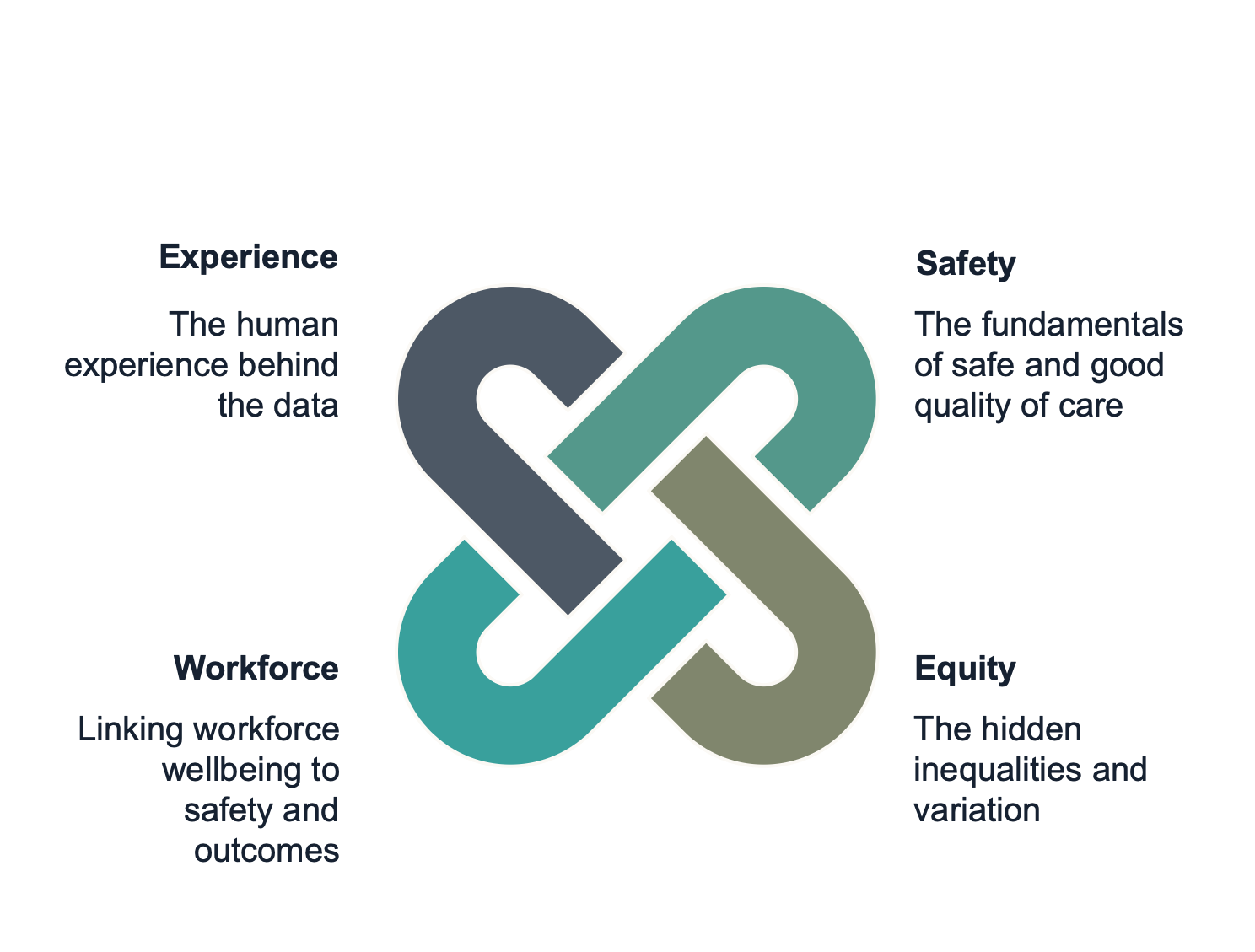
The Z-Score methodology, weighting system, and trust-level risk findings behind the SMI.
Why current approaches to maternity improvement aren't working, and what needs to change.

When you need hands-on support alongside the data. Our clinician-led forensic review service for maternity units.
A meaningful discussion about what your data reveals and how decision intelligence can help you lead change with confidence.
Contact: Mark Jennings · Chief Solutions & Services Officer