Strasys webinar: NHS groups, mergers and the three shifts
Naeem Younis, CEO of Strasys, the Decision Intelligence engine for healthcare, opened the latest Thinking Differently by drawing the distinctions this debate usually skips. A merger makes organisations one legal entity. A group keeps trusts separate in law but runs them as one. A collaborative is a looser arrangement to do specific things together. Each carries a very different cost and risk structure.
The three shifts represent current NHS strategy: hospital to community, analogue to digital, sickness to prevention.
Nearly 200 delegates signed up, from acute and private providers, ICBs, NHS England, government, primary and community care, charities and academia, with one in ten from outside the UK.
The conversation starts one question too late
The debate opened with the questions of “which structure, which contract, which footprint, who leads and who follows”. Somebody has to answer those questions. But they sit on top of a deeper question, and it is a business model question. What does the organisation produce, for whom, and how does it create value out of what it has?
For most, the answer has been activity. Episodes, beds, appointments, admissions, and the machinery are built to measure and reward exactly that. That model built the NHS we have and is arguably out of road. The three shifts ask for two things at once that activity-based models have never managed together: industrialise at scale and affordably and personalise around what people actually need. Strasys analysis points to roughly £8 billion of trapped value inside the larger NHS organisations.
Scale is for strategy, not for running hospitals

Sir David Dalton
Author of the Dalton Review, former Chief Executive, Northern Care Alliance
English trust numbers have fallen from around 430 to around 200 in thirty years, largely organically, following the pattern of most developed health systems. Scale can reduce unwarranted variation, remove duplication and open career progression. A group achieves much of what a merger achieves, faster and more cheaply.
The group headquarters is not there to run the hospitals
The review found that groups working well internationally served a population of one to two million, with three to six delivery points, £1 to £2 billion of spend and 15,000 to 25,000 staff. What stood out was their clarity about what the centre reserved: a single capital account, and an explicit decision on what gets standardised so there are not three ways of doing the same thing. Operational management stays with local leaders. The group chief executive does not take the decisions the trust chief executive was taking.
The original motivation was safety, not size
The review’s core vision was founded on patient safety, with alarm at the variation in harm across England, and a question about why improvement methods were not travelling from the organisations that had them to the ones in difficulty. There was a second, less comfortable motivation. Chief executives were nodding along to strategic service change and then digging their heels in locally, because change did not serve their own organisation’s interests. Bristol is cited as having addressed this effectively: historic rivalries set aside, a single joint service strategy agreed, and the governance then wrapped around it.
A single guiding mind, and then everything at once

Professor Lesley Dwyer
Chief Executive, Norfolk and Waveney University Hospitals Group
Norfolk and Waveney meets every Dalton criterion for a group. Meeting the conditions is not the same as getting it right. One of the oldest populations in the UK, rural and coastal deprivation, workforce fragility, one hospital ranked worst in England, two RAAC hospitals, and financial pressure so long-standing that Professor Dwyer cannot recall a period when Norfolk was described as sustainable.
An earlier attempt at a group was abandoned around COVID and replaced with an acute collaborative, which by 2024/25 had not delivered the clinical strategy or the shared patient record. The group was approved in February 2025 and held its first proper group board in December.
The value of a group is a question you keep answering
The organising idea was a single guiding mind: collective agreement on direction, which lets every programme run at once rather than in a queue. She was unequivocal that a strategy and a set of values will not help you without a common way of improving. The group now describes itself as a group within a system rather than a group of three acute hospitals and is moving towards a merger to release value the group form alone will not.
What she would do differently
Spend far more time on cultural due diligence. What they saw at the point of coming together was resistance and a lack of trust, and they assumed seeing it was enough. And start developing the clinical strategy as soon as you become a group, rather than focusing first on the mechanics of governance, because it is the clinical strategy that binds people together.
Integrating without assuming acquisition
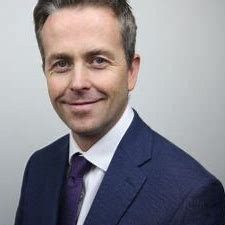
John Grinnell
Chief Executive, Alder Hey Children’s NHS Foundation Trust
Work with Strasys led to an uncomfortable moment. Despite the quality of the work Alder Hey and its partners were doing, outcomes for children were getting worse across mental health, obesity, inequality and school readiness. That prompted a question about whether more excellent healthcare is enough and became the genesis of Vision 2030.
Organising around the child, not the institution
In Cheshire and Merseyside, around 600,000 children are served by nine acute providers, three mental health providers and dozens of neurodevelopmental providers, alongside primary care, local authorities, schools and the voluntary sector. Each doing good work. Seen through the eyes of a family, close to impossible to navigate. Good organisations do not automatically add up to a good system.
The strategy was shaped by what children and families said they needed, centred around four needs: get me well, personalise care, bring me the future today, improve my life chances. Three questions follow. What genuinely needs scale? What must stay intensely local? And the hard one: what should Alder Hey not deliver at all?
Permission, not a destination
The Integrated Health Organisation model offers a way of integrating without assuming acquisition, with shared outcomes and distributed capability. The Advanced Foundation Trust is understood the same way: not a destination but permission, freedom used to take responsibility for population outcomes rather than institutional throughput. That requires organisations prepared to give things up as well as take things on. Prevention needs a wider coalition still, because you cannot treat your way out of child poverty. The test is not whether we integrated our organisations, but whether a family can tell that we haven’t.
Money and professional boundaries get in the way most
Asked where the current model obstructs rather than helps, John looked past organisational sovereignty to two things. The first is how money flows, through healthcare and through the wider agencies around it. In any industry, without the right financial incentives it is very hard to produce the right behaviours.
The second cuts deeper than organisational boundaries. The professions themselves, and the Royal Colleges, are designed to work in lanes. Until that is addressed, services will continue to be designed around what makes life easier for the people delivering them rather than around the child.
The structure is the container
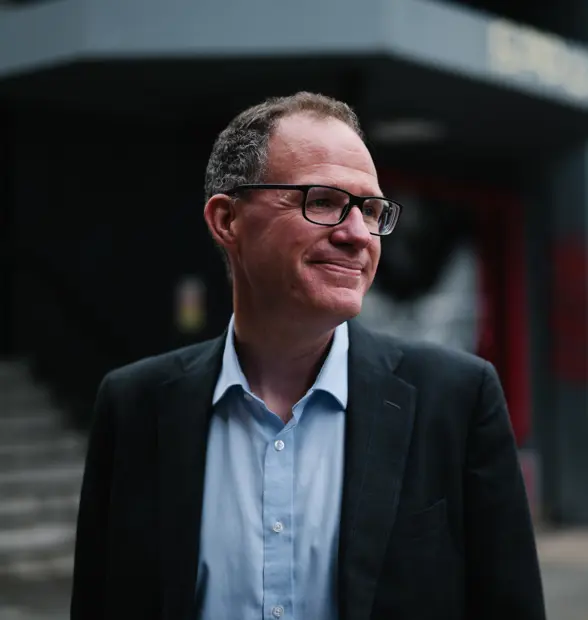
Robert McGough
Partner, Hill Dickinson
Most of these processes begin with the wrong question. Not what structure should we create, but what problem requires these organisations to come together, and what operating model will make that happen. A group or merger does not standardise a pathway, improve outcomes, move staff or release estates value. It creates the authority and conditions in which those things can happen. If the benefits case cannot be expressed in numbers, service changes, or what a family would feel, the structure is doing too much of the heavy lifting.
Six traps, none of them legal defects
These are execution failures that governance arrangements either expose or conceal.
- Form before purpose. The structure is chosen before the service problem is defined, and the counterfactual is never explored beyond “do nothing”. A real counterfactual asks what else could we do.
- Consensus without trade-off. Partners agree in principle and then do not agree the activity, budgets, capital or decision powers that have to move.
- Shared leaders, split authority. One individual across organisations, while each board keeps separate legal accountabilities and can revisit decisions when the consequences bite.
- Synergies without investment. Digital convergence, workforce redesign and standardisation are claimed as benefits, with no funding in the business case for double running.
- Culture treated as communications. Branding and engagement will not resolve identity, status and perceived dominance, and will not reconcile clinical teams that have been at loggerheads for years.
- Transaction as the finish line. A signing ceremony, then far less grip on the integration that follows. That day should be the start line.
Underneath all six sits a capacity paradox. It is not that mergers never work. The integration programme consumes precisely the leadership capacity needed to deliver the benefits that justified it.
The test boards should keep applying
NHS England’s transaction guidance asks whether deliverable benefits materially outweigh costs and risks. Boards should apply that test repeatedly through implementation, not only at approval. The organisations that manage this well are not less political or less complex than the ones that do not. They make the difficult choices earlier and more clearly and build the machinery that keeps those choices made.
Practical lessons for leaders
At Strasys, we work with organisations on both sides of this question: those designing new structures and those trying to make the ones they have deliver. Read more about Alder Hey’s Vision 2030 and our work on releasing trapped value.
Next steps
- Watch the recording:
- See previous and sign up to our next webinar on 10 November 2026: www.strasys.uk/events/
- Sign up to our Thinking Differently newsletter
- Learn more about the innovative Strasys tools and methods: hello@strasys.uk
Strasys, the Decision Intelligence engine for healthcare, launched their “Thinking Differently” webinar series in March 2024 and couldn’t have predicted how popular it was going to be. Covering the pertinent topics being discussed in boardrooms from workforce, inequalities to productivity, a clear demonstration of the appetite for new ideas and thought leadership in this space.
The key questions
A merger brings organisations together as a single legal entity. A group keeps trusts separate in law but runs them as one, usually through joint committees and shared executive and non-executive teams. A collaborative is a looser arrangement to do specific things together. Each carries a different cost and risk structure, which is why the choice matters.
Harvard Business Review puts the failure rate of mergers and acquisitions at 70 to 90 per cent. In the NHS, The King’s Fund reviewed 20 trust and foundation trust mergers between 2010 and 2015 and found roughly £2 billion spent on 12 of them, with little evidence that merging produces more sustainable organisations. The structure is a container. It creates the authority and conditions for pathway standardisation and better outcomes, but it does not deliver them by itself.
The Dalton Review found groups working well internationally served a population of one to two million, with three to six delivery points, £1 to £2 billion of turnover and 15,000 to 25,000 staff. The group headquarters sets strategy, capital investment and standardisation, while operational management stays with local leadership teams.
Six recurring traps: choosing the form before defining the purpose, consensus in principle without agreement on trade-offs, shared leaders with split legal authority, claimed synergies with no funding for double running, treating culture as a communications exercise, and treating the transaction as the finish line rather than the start line.
The three shifts ask boards to industrialise at scale and personalise around individual need at the same time, something activity-based models have never achieved. That turns a structural question into a business model question: what does the organisation produce, for whom, and how does it create value from what it has?