 Naeem Younis
 Robert McGough
The NHS is about to be handed decisions it has spent a decade dismantling its ability to make. A decade of cost reduction took out the management accounting, commissioning and analytical functions that turn a devolved budget into a defensible decision. Devolution changes who holds the decision. Whether it can then be made well is a separate question, and it is the one this paper is about.
From the room
“Every savings round takes out the function you need to avoid the next one.”
A former trust chief executive
Reported without attribution under the Chatham House Rule
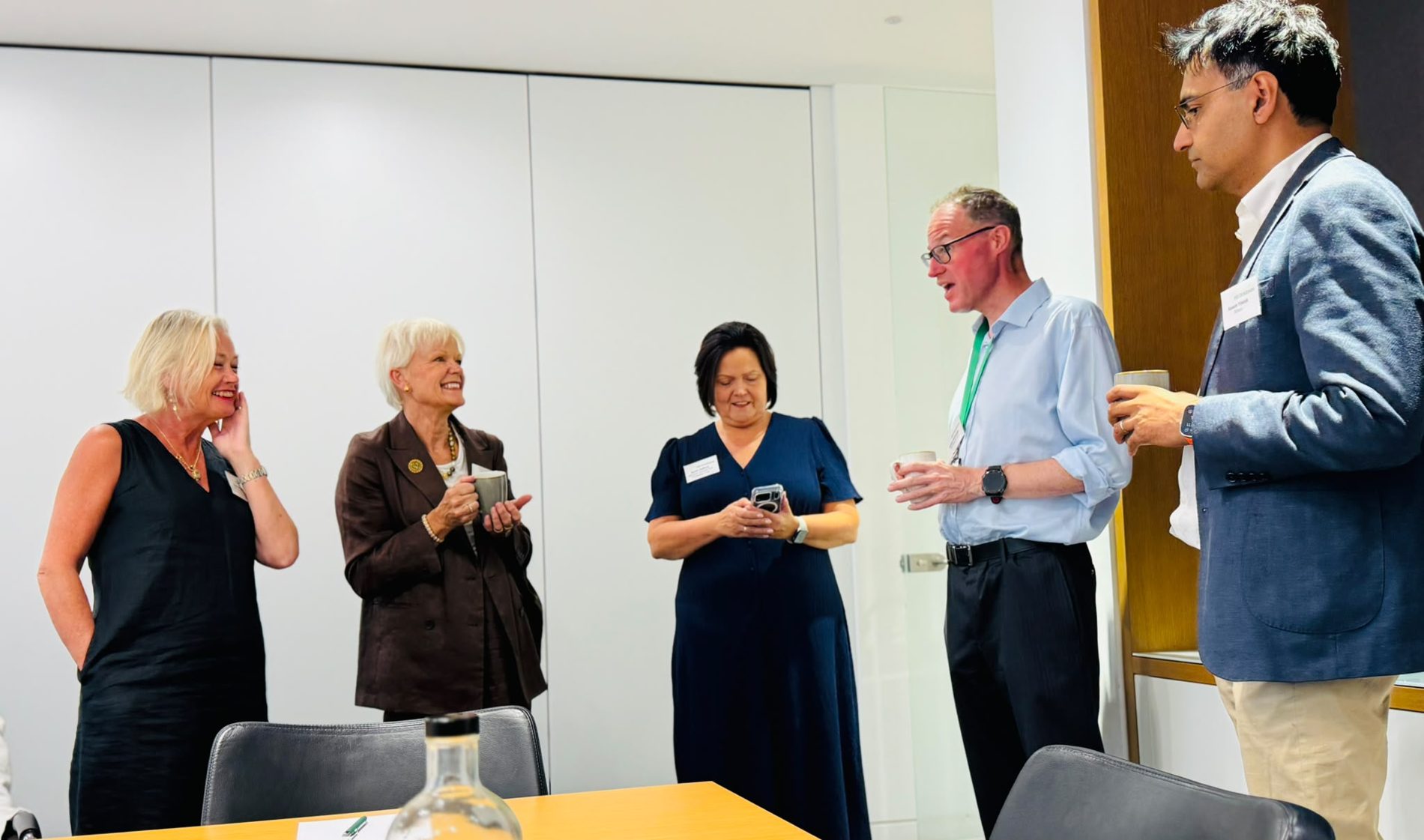
Co-chaired by Naeem Younis of Strasys and Robert McGough, Head of Health Commercial and Regulatory at Hill Dickinson. The room held four NHS chief executives, a health economist, an improvement expert, health legal and governance specialists, a healthcare data leader and a medical leader. Views are reported without attribution. The recommendations are ours, drawn from what we heard, and are not positions agreed by participants.
The argument
Five things that will still be true the day after devolution
The decision moves faster than the capability to make it
Moving authority to a local system takes a legislative session. Rebuilding the capability to use it takes years, and those are the functions successive savings rounds removed first.
The gap between spend and outcome is trapped value
The money is doing something, just not the thing the population needs. Spending less on the same design leaves every pound of it exactly where it was.
The money does not follow the change
A hospital's cost base steps rather than slopes. Close a ward and the estate, the overheads and the on-call rota stay while the income falls, so a trust doing the right thing carries stranded costs for it.
Leaders are exposed, and nobody has mapped the exposure
Criminal, regulatory and public law risk all sit on the person who changes a service. Leaving it alone carries none of that, so the service stays exactly as it is, which is what the system is built to produce.
The answers already exist somewhere in the system
Approaches that work already run in single organisations and at system scale. What is missing is the freedom, the capability, the funding horizon and the cover that would let them spread.
Why now
Three conditions have arrived together
None of them held for any previous attempt to move power out of the centre.
A Prime Minister who has held the health brief
Andy Burnham has promised the biggest rebalancing of power the country has ever seen, and Yvette Cooper took health and social care days later with real political weight behind her. Social care sits in the first rank of priorities for the first time in years.
The delivery architecture is already moving
The Neighbourhood Health Framework set out ten core steps for local government and integrated care boards during 2026/27. A national programme runs across 43 places, and 120 neighbourhood health centres are committed by 2030.
Capability is at its thinnest
Trusts are expected to break even while delivering at least 2% productivity. The functions a devolved decision depends on are the ones in scope for this year's savings, which is how the last decade worked.
What boards should do now
Four moves a board can make this quarter
Every one of these can start this quarter, before any reconfiguration is on the table and without moving a single post.
Know your capability position before the decision arrives
Assess what you actually hold across management accounting, commissioning, population analytics and service redesign, and share it with your integrated care board. Keep it as an assurance conversation between partners rather than a public declaration.
Stop cutting the people who find the savings
Take analytical and improvement roles out of scope for in-year vacancy freezes. Every savings round that removes them makes next year's redesign harder and the year after that impossible.
Ask how the decision was made, as well as what was decided
Boards report finance, activity, safety and workforce, and none of them report decision quality. Fold it into the assurance framework you already have rather than adding an annex.
Target the next round of cost reduction at the largest gap
Ask where the distance between resource in and outcome out is widest, and design against that. A uniform percentage across directorates takes most from the services with least slack.
If you only do one thing next: ask your executive team what the organisation could model, price and defend tomorrow morning if it had to. The answer is usually shorter than anyone expects.
Explore the paper
Six ways into the argument
The gap between spend and outcome
The strike days, the concession that has to be made about them, and why the sequence is more damning once you make it. What trapped value means, and how it differs from peer benchmarking.
Political and structural drag
Why acute money will not move, including the financial mechanism most business cases price wrongly: a cost base that steps rather than slopes, and the stranded costs that follow.
A workforce shaped by growth
Employee costs at around three-quarters of provider spend, an eroded management pipeline, and an organisation with more clinical staff than ever and less idea where to put them.
Freedom and air cover to act
What a chief executive is really asking for when she asks for air cover. The criminal, regulatory and public law exposure carried by the person who changes a service, and why section 242 is the more likely obstacle than a prosecution.
People and capability
The service pulls the tangible levers of process, structure and finance, and pays far less attention to whether anyone is left who can make them move. Where that capability sits today, and what it takes to keep it.
Policy recommendations
Eight recommendations in priority order, for government and for boards. Ours rather than the room’s, drawn from what we heard, with the reasoning set out against each one.
The four barriers
Each barrier makes the next one worse
Investment defends the acute hospital by default, which shapes who gets recruited, which wears the workforce down, which stops anyone interrogating the data that would challenge the first barrier. None of the four can be fixed on its own.
The full white paper
Read the complete argument
The complete paper sits here on the same page. Take the PDF if you would rather read it away from a screen.
Chapter 1
The gap between what is spent and what is achieved
During the resident doctors' strikes, hospitals did something they had spent years being told was operationally impossible. They put their most senior clinicians at the front door.
Participants described the result plainly. Empty waiting rooms, empty corridors, empty inpatient beds. Senior people at the front door appeared to change the flow of the whole hospital, on days when there were fewer staff in the building than usual.
Then the strike ended and the rota went back.
Strike days are not clean evidence, and that has to be conceded. Elective activity was cancelled, patients were told to stay away, and demand was suppressed as well as managed.
The concession makes the sequence worse. The service saw a materially better result, could not work out what had caused it, and never tested the promising explanation under normal conditions. Whatever share of it came from the change at the front door is still unmeasured today, and still unavailable to any board now working out how to staff its own.
That is what we mean by trapped value: the difference between the resources a trust puts in and the outcomes it gets out, where the difference comes down to how services are configured, how staff are deployed and how decisions are taken. It is recoverable in principle.
Spending less on the same system does not change where the money goes.
Releasing it means changing the configuration, and that means someone local has to be able to decide.
Chapter 2
Why now is different
For the first time in a decade, government is proposing to let them decide.
Andy Burnham became Prime Minister having previously held the health brief, and has committed to what he calls the biggest rebalancing of power the country has seen. Yvette Cooper took health and social care in July 2026 with real political weight behind her. Social care sits in the government's first rank of priorities for the first time in years.
The delivery architecture is already moving. The Neighbourhood Health Framework published in March 2026 set out ten core steps for local government and integrated care boards during 2026/27. A national implementation programme is running across 43 places⁷, and government has committed to 120 neighbourhood health centres by 2030.
The room supported the direction, but one consistent concern emerged. Devolution changes who holds the decision. Whether they can then make it well is a separate question, and one the discussion kept returning to.
Chapter 3
Political and structural drag
Political considerations shape organisational choices in the NHS to an extent that would surprise most people outside it. Recent reforms have blurred accountability, producing a system where responsibility is shared without always being clearly owned.
The ambitions of the 10 Year Health Plan are widely supported and remain largely aspirational, because nobody has been clear about how any of it actually gets done. Chief executives are expected to deliver transformation while working inside constraints they do not control. Neighbourhood working still has no agreed definition of what a neighbourhood arrangement has to be able to do, which leaves 43 places each interpreting it locally.
A system designed to do what it does
The NHS has usually responded to financial pressure by cutting capital, prevention, social care and community services first, with demand "shuffling back up to the acute door." Power stays weighted towards acute hospitals, which makes it hard for commissioners to move investment towards prevention even where the evidence is clear.
Underneath that sits a financial mechanism most business cases price wrongly. A hospital's cost base steps rather than slopes.¹ Close a ward and the estate, the overheads and the on-call rota all stay where they are while the income falls, so the cash released comes nowhere near the figure in the plan. The genuinely variable share of a bed day is small. That is why moving care out of hospital looks affordable on paper and so seldom releases money in practice, and why a trust doing the right thing by its population can end up carrying stranded costs for it.
Several participants questioned whether the district general hospital model is still fit for purpose. One described it as "like running McDonald's and a Michelin-star restaurant in the same building."
The default has consequences well beyond the estate. If investment flows to the same institutions regardless of outcome, so does recruitment.
Chapter 4
A workforce shaped by growth
The Nuffield Trust puts employee costs at around three-quarters of what NHS providers spend.² There is still little discussion about changing the shape of that workforce to match what the population now needs.
Staffing decisions have too often followed activity levels, historical patterns, or whoever had the loudest voice in the room. The system responded to pressure by hiring rather than by redesigning the service those staff were being recruited into.
An eroded management pipeline
The bigger loss came alongside that growth.
Restructure after restructure has stripped out experienced staff and specialist expertise, in some organisations reaching core capabilities such as management accounting. Management development was among the first things cut when money got tight. Commissioning expertise thinned. Analytical capacity was filed under back office.
The focus on cost reduction did most of this damage, which is the part that never appears in the savings return. Several participants had watched management accounting capability disappear from trusts that then could not model the consequences of their own service changes.
A decade of reducing cost has left NHS organisations leaner in the functions that produce this year's savings and weaker in the functions that produce next decade's value.
So the NHS now employs more clinical staff than at any point in its history, and its ability to work out where to put them has gone backwards. That is the gap devolution is about to be poured into.
It is also, predictably, a way of managing people that wears them down.
Chapter 5
A disengaged and fearful workforce
The 2025 NHS Staff Survey recorded many engagement and morale measures at their lowest on record. The share of staff who would be happy with the care their own organisation gave a friend or relative fell to 62.8%, the lowest that measure has ever been.⁶ Scores on freedom to speak up, and on whether speaking up leads to anything, both declined.
The NHS has leaned heavily on a particular kind of manager, the one who in a participant's phrase would "lay down in the road for you and do anything." That group is shrinking, and nothing is replacing it.
Alongside disengagement sits fear, and the fear is well founded. Think about what a chief executive is actually weighing when she proposes moving a service. The clinical risk and the financial risk, certainly. Also gross negligence manslaughter at common law, prosecution under section 37 of the Health and Safety at Work Act, the fit and proper person test, CQC enforcement, and a coroner's report to prevent future deaths.
No adviser can tell her with confidence where the line sits, because nobody has drawn it. Leaving the service exactly as it is carries none of that exposure, and it is the option her successor will inherit.
The more likely obstacle is quieter than any of it. Section 242 of the NHS Act 2006 requires that people who use a service are involved in developing proposals to change it, at the formative stage rather than once a decision has taken shape, and the greater the impact of the change the more involvement is required.³ Reconfigurations are judicially reviewed on precisely that ground. Prosecution of a chief executive is rare. Having a service change stopped in the Administrative Court is not, and that is the risk they actually plan around.
A workforce in this condition will use devolved freedom to avoid blame rather than to redesign anything, and it will stop asking hard questions of its own performance.
Chapter 6
Data and social care
The NHS's use of its own data is a significant missed opportunity. Volume is not the problem. As one participant put it, "the data is there, but not available in the right format and the right questions are not being asked of it." Boards cannot see their own unwarranted variation, and cannot test a redesign proposal against evidence before committing to it.
This is the work decision intelligence does. It takes information an organisation already holds and puts it in front of the decisions the organisation is currently unable to make. It runs on the analytical capability described in barrier two, which is the capability that got cut.
Social care reform is treated as the precondition for everything else: "before you get to reimagine healthcare, you have to sort out social care." The observation is fair and the reform is necessary. Meanwhile the acute sector remains a substantial source of its own bed pressure.
Productivity policy has made this worse. Vacancy freezes and the removal of non-clinical roles have cut the support available to clinical teams, which moves the work onto the most expensive staff in the building.
Consultants doing their own typing is not a productivity gain.
Chapter 7
Freedom and air cover to act
NHS leaders need more autonomy, and they need to be told plainly that they have permission to make hard decisions. Central control has eaten the freedoms originally designed into the system. Leaders need room to try things and to learn from what fails, including through new organisational models such as Advanced Foundation Trusts.⁸
Air cover has a legal dimension that usually gets left out of the policy conversation. The chief executive in barrier three is not asking for immunity, and no minister is going to hand it to her. She is asking for something simpler: tell me what a properly evidenced decision and a defensible consultation look like, and tell me what following them is worth if a regulator, coroner or court examines the decision two years from now.
It has a financial dimension as well. A leader who closes a ward on a plan built at average cost is left holding the stranded overhead on reduced income, and looking as though she failed. Until the money follows the change at something closer to the real rate, the safest thing any chief executive can do is leave the configuration exactly as it is. That is a rational response to how the system is built, and the system gets it every time.
Where staff have been given time, permission and better information, the results have been significant. One paediatrician working alongside primary care cut referrals substantially. Other trusts have brought down waiting lists, sickness absence and bank staff costs by making room for workforce-led improvement. None of it required new money. It required somebody senior to say yes.
Chapter 8
Populations and prevention
Real change needs a much stronger focus on population health needs and prevention. Instead of continuing to respond to illness as it arrives, the NHS needs a population-based approach that works with other agencies on the things that actually generate demand: poverty, housing, isolation, work.
Segmenting a population by need, rather than by whichever service happens to see them now, is the practical starting point. It is a method we use in our own work. Success depends on pooled budgets, shared risk and closer integration between mental health, primary care, community and acute services.
Brazil's Family Health Strategy gives community health workers a defined set of households and targets solutions at what those households need, with better health arriving as a consequence rather than as the goal. Closer to home, Hackney's primary care, voluntary sector and acute partners moved resources between them because they were united by one vision for their population. That last point is the whole trick. Reallocation fails when somebody has to lose for somebody else to win.
Chapter 9
People and capability
The biggest opportunity lies in the staff already there, and in the skills they need to lead change. The NHS concentrates on the tangible levers of process, structure and finance, and pays much less attention to the people and capability that decide whether pulling any of those levers moves anything at all.
This should never become a national readiness test. The NHS has run that experiment through foundation trust authorisation and earned autonomy, and each time a capability gate designed to protect standards turned into a mechanism for keeping power at the centre. Capability and authority should move on the same date and out of the same settlement.
Managers need to be taught to manage. The NHS Leadership Academy already exists, and the gap it has not closed sits at operational and administrative grades. A band 6 service manager can end up running the flow of a 40-bed ward having had no formal training in how to do it. That is where an accredited academy with a real career path would earn its keep.
Analytical and commissioning capacity has to be treated as core rather than overhead. These are the functions that turn a devolved budget into a decision somebody can defend.
Staff also need to feel safe enough to say what they think. Change holds when people find their own voice and their own ownership in it, rather than when somebody outside supplies the momentum.
Chapter 10
Funding and governing outcomes
Funding and accountability both need rethinking to support better outcomes. Annual cycles cannot buy multi-year results. Participants pointed to a five-year outcome-based contract covering community services and elements of social care, tying funding to population health outcomes rather than activity alone. It gave providers room to move and still gave commissioners something to hold them to.
Two attempts of this kind failed. Cambridgeshire's UnitingCare contract, worth £800m over five years, collapsed eight months in and left £16m of unfunded costs behind it.⁴ Two years later Staffordshire abandoned a £687m cancer procurement when the last bidder standing could not show its offer was financially viable, having spent around £840,000 to reach that point.⁵ The idea survives both. What sank them was handing contracts of that size to commissioners who had been stripped of the capacity to price them.
The wider task is scaling what already works. Proven approaches to cutting waiting lists and improving care too often stay locked inside the organisation that developed them, while the rest of the system "limps along" rather than learning from what succeeded fifteen miles away.
Chapter 11
Policy recommendations
The room was clear that the answers largely exist, and that the work is in creating the conditions that let proven solutions be implemented, scaled and sustained. It did not set out to write a policy programme, and it did not produce one.
The recommendations below are ours. Strasys and Hill Dickinson have drawn them from what we heard across the discussion, and they should not be read as positions agreed by participants or by the organisations they work for.
White paper
Conclusion
The focus on cost reduction has run out of road. The next round will deliver the same savings return and the same erosion of the capability needed to avoid having to do it again.
Government is about to offer local leaders something the service has asked for consistently: power closer to the decision, freedom to act, permission to design services around the people who use them. The offer is genuine and the evidence for what works already exists.
Whether any of it lands comes down to something that sits below policy. When a board is handed the authority to redesign a pathway, close a service or move investment from acute to community, does it hold the analytical capability, the management capability and the psychological safety to make that decision well and defend it afterwards?
For most organisations in this country the answer today is no.
It is fixable, and fixing it costs less than leaving it.
Devolution is welcome. The work now is making sure that when the decision arrives, somebody in the building is ready to take it.
White paper
Sources
Figures in this paper are drawn from published sources rather than from the discussion. Views attributed to the room are reported without attribution under the Chatham House Rule.
¹ Bed-day costs comprise a high proportion of fixed and semi-fixed costs. Semi-fixed costs move in steps rather than continuously, so reducing activity releases the variable element as cash while the fixed element is redeployed at best. The cash-releasing share of average cost varies materially by service and by trust, and published estimates differ, so no single percentage is used here.
² Nuffield Trust, The NHS workforce in numbers, which puts employee costs at around three-quarters of NHS providers' expenditure. The King's Fund separately puts staff costs at around half of total NHS day-to-day spending. The two measure different things, provider expenditure against the whole system budget.
³ Section 242 of the NHS Act 2006, as amended. Case law establishes that involvement must occur at the formative stage and in advance of a final decision, and that the requirement is proportionate to the impact of the proposed change.
⁴ National Audit Office, Investigation into the collapse of the UnitingCare Partnership contract in Cambridgeshire and Peterborough, 2016, and the Committee of Public Accounts report, 2016-17.
⁵ Staffordshire cancer and end-of-life care procurement, abandoned 2017. The cancer element was valued at £687m within a combined ten-year programme of around £1.2bn.
⁶ NHS Staff Survey 2025, national results published March 2026. 62.84% of staff said they would be happy with the standard of care provided by their organisation if a friend or relative needed treatment, down from 64.26% and the lowest recorded. Measures on freedom to speak up also declined.
⁷ Neighbourhood Health Framework, Department of Health and Social Care, 17 March 2026. The National Neighbourhood Health Implementation Programme covers 43 places. Government has committed to 120 neighbourhood health centres by 2030 and 250 by 2035.
⁸ 10 Year Health Plan for England, Fit for the Future, July 2025, and the NHS Medium Term Planning Framework, from which the advanced foundation trust route and the integrated health organisation model derive.
Devolve the decision, fund the capability
That is the argument. If you want to test it against your own organisation, get in touch.
Relevant Strasys capabilities
Frequently asked questions
What does trapped value mean?
The difference between the resources a trust puts in and the outcomes it gets out, where the difference comes down to how services are configured, how staff are deployed and how decisions are taken. It differs from unwarranted variation, which compares a trust against its peers. A trust can sit top of its peer group and still be spending against a design that cannot deliver what its population needs. This paper attaches no monetary figure to it.
Why does moving care out of hospital rarely release money?
Because a hospital's cost base steps rather than slopes. Close a ward and the estate, the overheads and the on-call rota all stay where they are while the income falls, so the cash released comes nowhere near the figure in the plan. The genuinely variable share of a bed day is small, which is why a business case built at average cost leaves a trust carrying stranded costs.
What legal exposure does a chief executive carry for changing a service?
Gross negligence manslaughter at common law, prosecution under section 37 of the Health and Safety at Work Act, the fit and proper person test, CQC enforcement and a coroner's report to prevent future deaths. Section 18 of the Corporate Manslaughter Act excludes individual liability for that offence, which is often misunderstood. The more likely obstacle is public law: section 242 of the NHS Act 2006 requires involvement at the formative stage, and reconfigurations are judicially reviewed on that ground.
Are these recommendations the view of the participants?
No. The roundtable was held under the Chatham House Rule and views are reported without attribution. The room did not set out to write a policy programme and did not produce one. The eight recommendations are ours, drawn by Strasys and Hill Dickinson from what we heard, and should not be read as positions agreed by participants or the organisations they work for.
How does Strasys work with boards on this?
We work alongside your own teams, so the capability stays with you after we have gone. That matters here more than usual, because the argument of this paper is that buying capability in and then losing it again is how the last decade went.
Get the paper
Ready to decide
Twenty-four pages, with the sources set out in full at the back.
Your copy is opening now
If the tab did not open, download it here.
Prefer to talk it through? Get in touch.