Strasys webinar: Beyond Job Planning
Naeem Younis, CEO of Strasys, the Decision Intelligence engine for healthcare, opened its latest webinar with the observation that every NHS strategy rests on an often unstated assumption that plans will translate into meaningful change on the ground. Yet in practice, no strategy reaches the front line without the central role of consultants, who act as the catalyst for activity across the entire organisation.
Yet many boards still cannot confidently answer three key questions — whether they have the right number of consultants in the right specialties doing the right work, because existing tools and frameworks were built for a different era.
Consultants in the NHS are roughly 5–7% of the NHS workforce, a small portion of headcount, but they hold a controlling fraction of the resources the NHS deploys. Every consultant directs a clinical team, shapes the use of theatres, diagnostics, beds and pathways.
Three gaps explain the productivity paradox
Naeem went on to outline three key gaps behind the workforce challenge: a “goodwill gap,” as discretionary effort declines when it goes unrecognised; a “friction gap,” where new capacity is lost in inefficient systems and an “incentive gap,” with outdated models rewarding time over impact. Together, these explain a stark paradox: more consultants, but falling productivity, highlighting a system measuring people numbers, not what truly matters.
Challenge from a board perspective
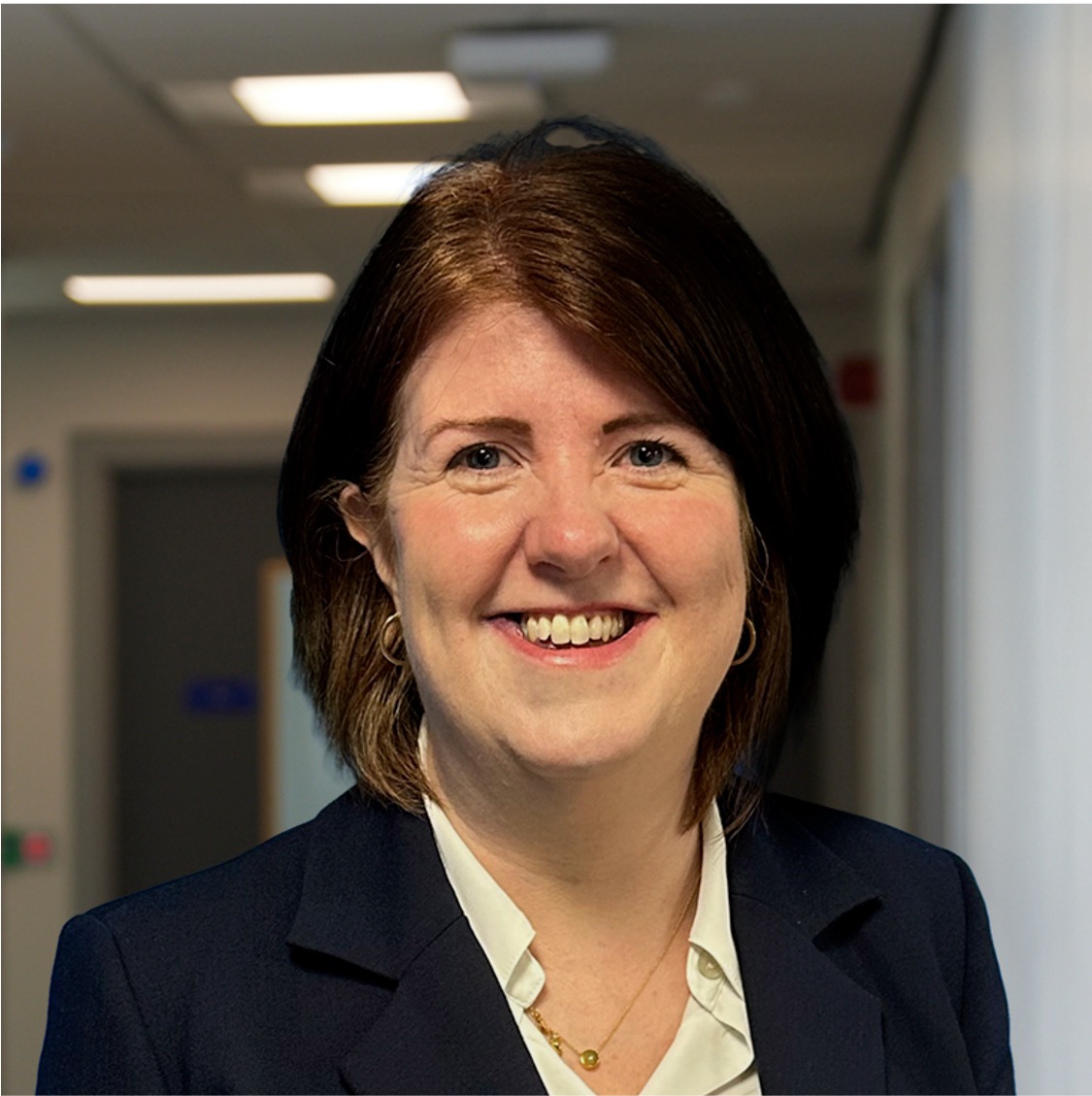
Dr Clare Hammell
Chief Medical Officer and Deputy CEO, Mid Cheshire Hospitals NHS Trust
Consultants sit at the centre of many of the key risks boards are managing from workforce capacity and service delivery to quality of care and financial sustainability. As a major organisational resource, often accounting for around 10–12% of operating costs, how consultants spend their time has a direct impact on access, patient experience and safety, making them central to delivering value across the system.
Balancing the consultant workforce paradox
Despite significant growth in the consultant workforce over the past decade, many organisations are not seeing the expected gains in output or productivity. Increased headcount is being offset by factors such as more part-time working, less experience, rising patient complexity, higher clinical standards and greater demands for out-of-hours care.
Culture eats policy
Boards often rely on job planning to oversee consultant activity, but assurance tends to focus on process rather than value. To properly understand impact, boards need clearer evidence of how consultant time supports service transformation and better outcomes, linking activity to patient care, population need and organisational priorities. This requires a shift beyond compliance towards meaningful clinical engagement, where consultants actively shape service models and resource use to deliver measurable system-wide value.
Misalignment between policy and clinical reality

Dr Azra Chang
Senior Advisor, Strasys and Consultant Anaesthetist
Consultants should be understood in the round, as professionals, people and central drivers of healthcare operations. Over the past decade, productivity reforms inspired by Lean, Six Sigma, Toyota and Virginia Mason, alongside policy changes such as junior doctor contract reform, have often struggled to deliver sustained gains. Many of those junior doctors are now consultants and despite a near 30% rise in consultant numbers since 2018, trust-level analyses suggest productivity improvements have been marginal, often under 3%.
Means of production built around the job plan, not need
A key issue is the misalignment between top-down policy and frontline clinical reality. Unlike models where the frontline helped design systems around a shared understanding of the “product”, NHS approaches have tended to prioritise process targets over how care is delivered. In practice, consultants act as the effective “means of production,” responsible for the full patient pathway and outcomes, yet performance is often measured through proxies such as waiting times or follow-up ratios.
Current NHS tools and policies remain too rigid
Rigid tools such as job planning further reduce flexibility, reinforcing a system where consultants work around imposed structures. By contrast, consultant-led approaches seen in parts of the private sector, including insourcing models, show how clearer ownership of the clinical product and alignment of activity with outcomes can improve efficiency.
The consultant in the right place

Dr Nadeem Moghal
Chief Medical and Innovation Officer, Strasys
He has observed the increasing focus on job planning as a tool to address post-COVID productivity challenges, prompting him to examine its origins and limitations. Drawing on his medical director experience, including the junior doctors strikes, he noted that when senior decision-makers e.g. consultants, were positioned at the front door, system flow improved markedly with reduced congestion and better performance against targets. This highlighted questions about how the consultant model should be reimagined beyond simply allocation.
Drawing on experience as both a consultant and a leader managing consultant teams across the NHS, he questioned what the consultant model should look like if the NHS is serious about improving value from such a significant investment. He observed that workforce growth is often driven less by strategic need and more by local pressures, where the “loudest voice” secures additional resource, leading to rapid expansion in some specialties.
Creating and innovating new models of care to meet patient and population needs
He reframed the question of what a consultant is for, arguing that consultants are not just employees but central to delivering value in the system. They direct and control care delivery, carry ultimate accountability and clinical risk, shape quality and set the culture for teams. When empowered, they can also design and innovate new models of care to meet patient and population needs. This requires a shift away from viewing consultants through a transactional, time-based lens towards recognising them as professionals focused on outcomes, value and legacy, where engagement is driven not by management control, but by a shared purpose to deliver lasting impact.
Balancing cost, demand and productivity

Rachel Lea
Chief Financial Officer, Alder Hey Children’s NHS Foundation Trust
From the work undertaken with Strasys, she reflected that as a CFO the same challenge arises each year: organisations are expected to deliver more from the same baseline, increasing productivity, whilst demand continues to rise, not only in volume but in complexity.
Efficiency beyond the consultant layer
The focus is less on whether efficiency is needed and more on how to achieve it in a way that is sustainable clinically, operationally and financially. While consultants are often the most visible part of the system, they sit at the top of a much wider delivery structure that includes multidisciplinary teams and the supporting system, with the true cost of care more than three times the direct consultant cost. However, organisations often manage this complexity through isolated levers such as job planning, additional payments and temporary staffing, which can create fragmented oversight and an “invisibility gap” where spend is known but the links to overall value and system performance are not.
For the first time, a single version of the truth
Through triangulating data across demand, capacity, skill mix, team dynamics, activity and cost, a more complete “single version of the truth” can be established, enabling new insights that are not visible when levers are considered separately. The first phase of work therefore concentrated on building this shared understanding, while the second phase focuses on using it to shift the operating model, organising around outcomes rather than transactions and spend.
Practical lessons for leaders
At Strasys, we have applied these principles over a number of years, working with partners such as Alder Hey and Mid Cheshire to develop methodologies and toolkits that help organisations design and deliver better care and outcomes. Read more about Alder Hey’s Vision 2030 and work in Mid Cheshire.
Next steps
- Watch the recording: View webinar recording
- See previous and sign up to our next webinar on 3 September 2026: www.strasys.uk/events/
- Sign up to our Thinking Differently newsletter
- Learn more about the innovative Strasys tools and methods: hello@strasys.uk
Strasys, the Decision Intelligence engine for healthcare, launched their “Thinking Differently” webinar series in March 2024 and couldn’t have predicted how popular it was going to be. Covering the pertinent topics being discussed in boardrooms from workforce, inequalities to productivity, a clear demonstration of the appetite for new ideas and thought leadership in this space.
The key questions
NHS consultant numbers have risen by 150% over 25 years while productivity has fallen by 12% since 2019. Three gaps explain this paradox: a “goodwill gap” where discretionary effort declines when unrecognised, a “friction gap” where new capacity is lost in inefficient systems, and an “incentive gap” with outdated models rewarding time over impact.
Boards often rely on job planning to oversee consultant activity, but assurance tends to focus on process rather than value. Rigid tools like job planning reduce flexibility, reinforcing a system where consultants work around imposed structures. Job planning should come later in redesign, not as the starting point.
Boards need clearer evidence of how consultant time supports service transformation and better outcomes, linking activity to patient care, population need and organisational priorities. This requires a shift beyond compliance towards meaningful clinical engagement, where consultants actively shape service models and resource use to deliver measurable system-wide value.
By triangulating data across demand, capacity, skill mix, team dynamics, activity and cost, a more complete “single version of the truth” can be established. This enables new insights not visible when levers are considered separately, shifting the operating model from transactions and spend to outcomes and value.